
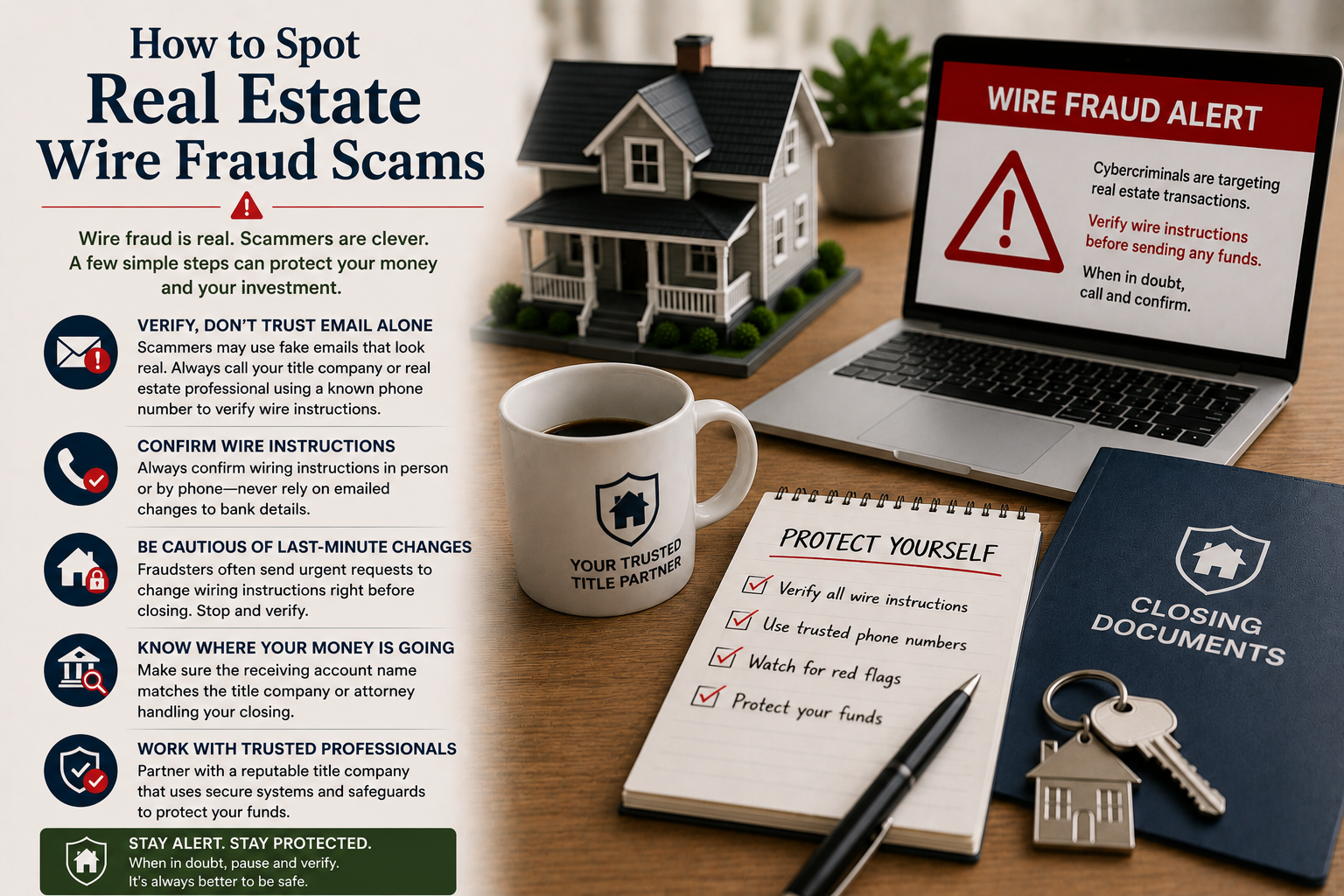
How to Spot Real Estate Wire Fraud Scams
How to Spot Real Estate Wire Fraud Scams
Every year, homebuyers, sellers, and business owners lose millions of dollars to real estate wire fraud — and it can happen to anyone. You could be days away from closing on your dream home or finalizing a commercial deal when a single fraudulent email redirects your funds straight into a scammer's account. By the time anyone notices, the money is gone.
At American Homeland Title Agency, protecting Ohio buyers, sellers, agents, and lenders is central to everything we do. Understanding how these scams work — and how to stop them — is one of the most important things you can do before sitting down at the closing table.
What Is Real Estate Wire Fraud?
Real estate wire fraud is a type of cybercrime where criminals intercept communications between buyers, sellers, real estate agents, title companies, and lenders. Their goal is to trick you into wiring your closing funds — down payments, earnest money, or commercial purchase amounts — to a fraudulent bank account they control.
These criminals are patient and strategic. They often monitor email accounts for weeks before striking, learning the names, timelines, and transaction details of everyone involved. When the timing is right, they send a convincing fake email appearing to come from your title company, agent, or lender — complete with updated wire instructions.
Red Flags to Watch For
Recognizing a scam before you act is your strongest defense. Be alert to these warning signs:
- Last-minute wire instruction changes. Legitimate wire instructions rarely change. If you receive updated banking information close to closing, treat it as suspicious until verified.
- Urgent pressure to act fast. Fraudsters create artificial urgency — telling you that delays will jeopardize the deal — to prevent you from slowing down and thinking critically.
- Slight email address variations. A scammer's email may look nearly identical to a real one. Look for extra letters, number substitutions, or misspelled domain names (e.g., "Ameri-can-Homeland" instead of "AmericanHomeland").
- Unusual grammar or tone. Messages that feel slightly "off" — awkward phrasing, odd formatting, or vague language — can signal a fraudulent sender.
- Requests for personal financial information via email. Reputable title companies and lenders do not ask for sensitive account details through unsecured email.
How These Scams Unfold
Residential closings are a prime target. A buyer receives an email that appears to be from the title company with updated wire instructions just before closing. They wire their down payment — sometimes tens of thousands of dollars — and only discover the fraud when they arrive at the closing table and the real title company has no record of receiving funds.
Commercial transactions carry even greater risk due to the larger dollar amounts involved. Business owners purchasing commercial property or finalizing lease agreements may receive spoofed emails from attorneys, brokers, or title agents. The scale of loss in commercial wire fraud can be devastating and, in some cases, company-threatening.
Ohio businesses engaged in regular real estate activity — such as developers, property management companies, and investors — face ongoing exposure because they conduct multiple transactions throughout the year, giving criminals more opportunities to monitor communications and strike.
How to Protect Yourself
No single step eliminates risk entirely, but layering multiple precautions significantly reduces your exposure.
For buyers and sellers:
- Always call your title company or agent directly using a phone number you already have on file — not one provided in the suspicious email — to verify any wire instructions before sending funds.
- Confirm account details verbally before every wire transfer, even if instructions appear unchanged.
- Never wire money based solely on email instructions.
For Ohio real estate agents:
- Use secure, encrypted email platforms for client communication.
- Proactively warn buyers and sellers early in the transaction process about wire fraud risks.
- Verify your own email security regularly and watch for signs that your account may have been compromised.
For loan officers and lenders:
- Establish clear written policies about how wire instructions are communicated and never deviate from those channels.
- Train staff to recognize phishing attempts and social engineering tactics.
For business owners:
- Implement dual-approval processes that require two employees to authorize any outgoing wire transfer.
- Work with your financial institution to set up callback verification protocols for large transfers.
- Review your cybersecurity practices with an IT professional, especially if you handle real estate transactions regularly.
Verification Is Your Best Protection
Wire fraud works because it exploits trust. Scammers count on the fact that you're busy, excited, and eager to close. Slowing down — even just long enough to make one phone call — can be the difference between a smooth closing and a financial catastrophe.
At American Homeland Title Agency, we are committed to keeping Ohio real estate transactions safe. We will never send you updated wire instructions by email without prior verbal confirmation. If anything feels wrong, stop and call us directly.
Protect your money. Verify everything.