
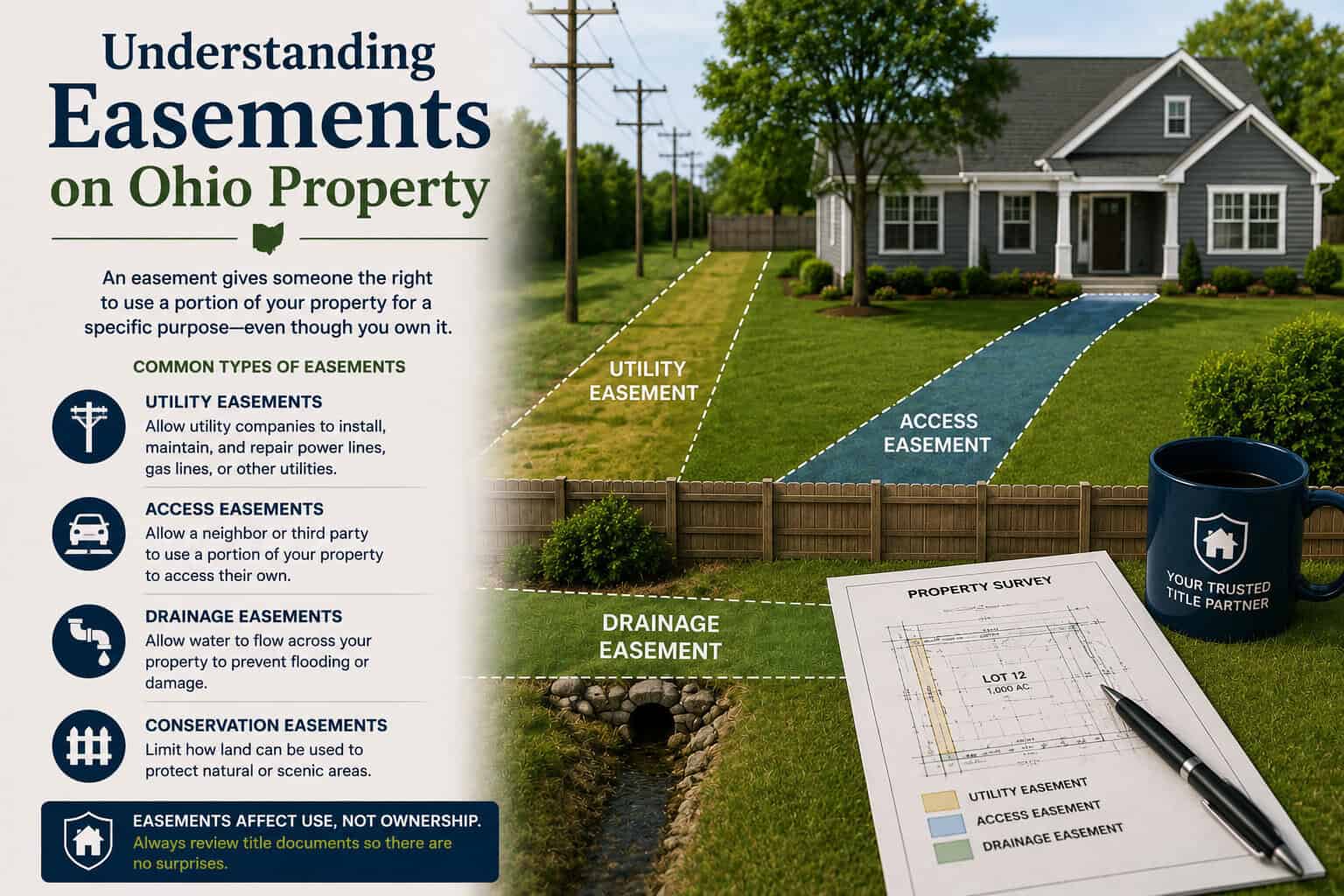
Understanding Easements on Ohio Property
Understanding Easements on Ohio Property
When you purchase property in Ohio, you're not always buying the exclusive right to use every inch of it. Easements are a common — and often misunderstood — part of real estate ownership that can affect what you can build, where you can build it, and how others may use a portion of your land.
Whether you're a homebuyer, a real estate agent, a loan officer, or a business owner, understanding easements before a transaction closes can save you from costly surprises down the road.
What Is an Easement?
An easement is a legal right that allows a person or entity to use a portion of someone else's property for a specific purpose. The property owner still holds title to the land, but they must allow that use to continue.
For example, a utility company may have the right to access a strip of your backyard to maintain power lines. A neighbor might have a recorded right to cross your driveway to reach their property. These rights don't disappear when ownership changes — they transfer with the land.
Common Types of Easements in Ohio
Ohio properties can carry several different types of easements. Here are the ones you're most likely to encounter:
- Utility easements — These are the most common. They give electric, gas, water, sewer, or telecommunications companies the right to install and maintain infrastructure across private land.
- Access or ingress/egress easements — These allow a person or neighboring property to cross your land to reach a road or another parcel. They're common in rural Ohio where landlocked parcels exist.
- Drainage easements — These permit the flow of stormwater or drainage across a property and often restrict what can be built in that area.
- Conservation easements — Landowners voluntarily restrict development or use of their land to protect natural resources, often in partnership with a government entity or land trust.
- Prescriptive easements — Similar to adverse possession, these arise when someone uses another's property openly and continuously for 21 years without permission. Ohio courts have recognized these in disputed property cases.
- Private easements — These exist between private parties and are typically created through a deed or written agreement, such as a shared driveway between two neighbors.
How Easements Affect Your Property Rights
Owning property with an easement doesn't mean you lose control of it — but your rights do have limits. Here's how easements can affect different aspects of ownership:
Development and construction: If a utility or drainage easement runs through a parcel, you generally cannot build structures within that corridor. This matters enormously for Ohio business owners and developers evaluating a site.
Financing: Lenders and their appraisers review easements carefully. An easement that significantly limits use or access can affect a property's appraised value and, in some cases, a lender's willingness to finance the purchase.
Property value: In most cases, utility easements have minimal impact on value. But an easement that restricts a key portion of a commercial lot or affects curb access can reduce what a property is worth on the open market.
Marketability: An undisclosed or disputed easement can cloud title, delay a closing, or even derail a transaction entirely.
Why Easements Matter During Title Review
This is where title professionals play a critical role. During the title search process, the team at American Homeland Title Agency reviews public records — deeds, plats, court records, and prior title policies — to identify easements that affect the subject property.
Easements are disclosed in the title commitment, which buyers and their agents should read carefully before closing. If an easement isn't identified before closing and later creates a problem, title insurance may provide protection — but only for covered matters that were not already known at the time of purchase.
The time to ask questions is before closing, not after.
What to Do When an Easement Is Discovered
Finding an easement on a property doesn't have to stop a transaction. Here's a practical approach for everyone involved:
- Review the recorded document. Get a copy of the actual easement from the deed or plat. The exact language matters — it defines the scope, location, and permitted use.
- Confirm the physical location. A survey can show where the easement sits on the ground and whether any existing structures encroach on it.
- Assess the impact. For buyers, consider whether the easement conflicts with your plans for the property. For agents and loan officers, loop in your title contact early if questions arise.
- Negotiate if appropriate. In some cases, easements can be modified or released through negotiation with the easement holder, though this requires legal documentation.
- Talk to a real estate attorney. If an easement raises complex questions — especially around access rights, value disputes, or development restrictions — consulting an attorney is the right move.
The Bottom Line
Easements are a normal part of Ohio real estate, but they deserve careful attention in every transaction. Knowing what type of easement exists, where it's located, and how it affects the property gives buyers, sellers, and professionals the clarity needed to make sound decisions.
At American Homeland Title Agency, our title search and closing process is designed to surface these issues early — so everyone at the closing table has the full picture. If you have questions about easements or title matters on an Ohio property, reach out to our team. We're here to help.