
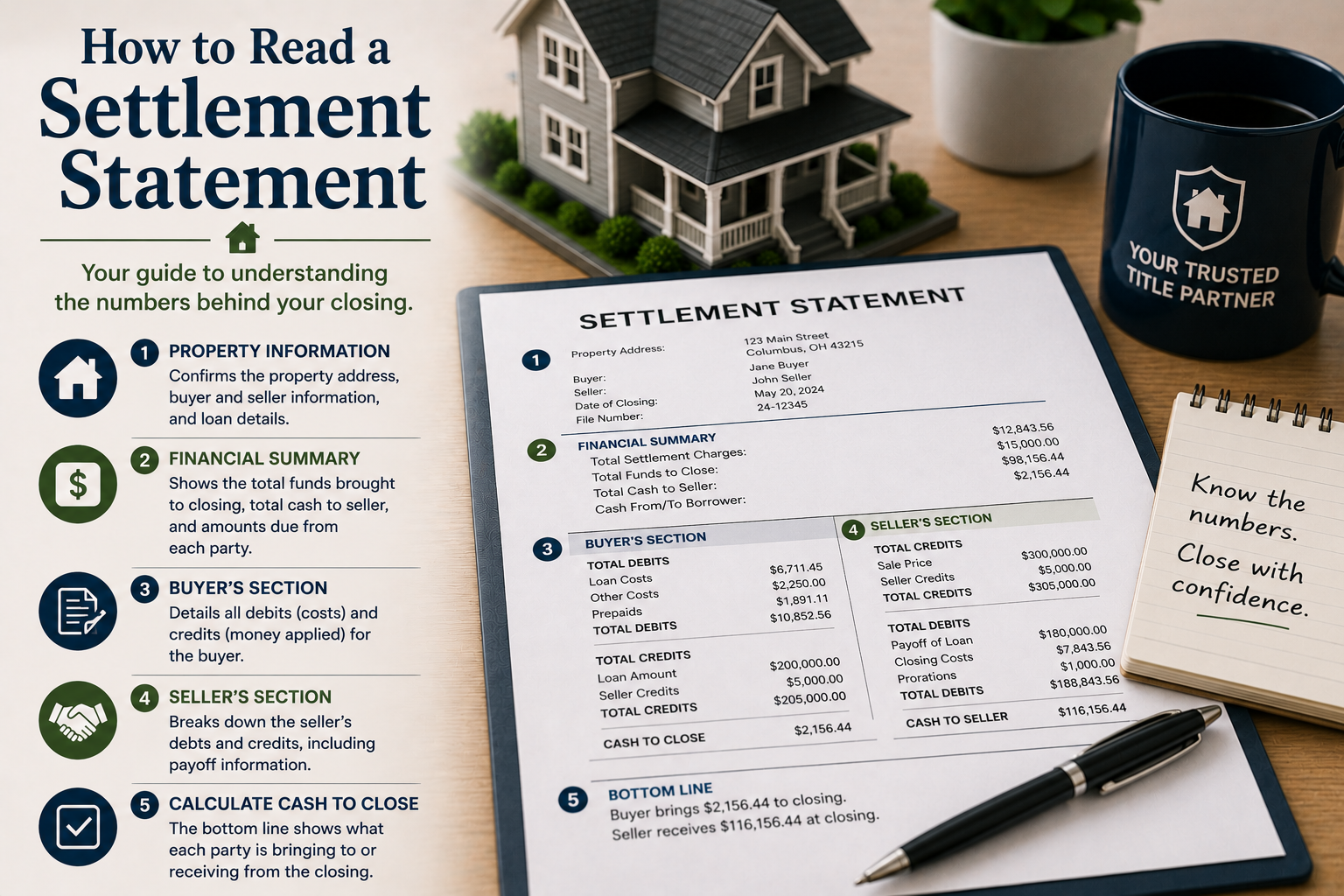
How to Read a Settlement Statement
What Is a Quit Claim Deed in Ohio?
Closing day is one of the most significant moments in any real estate transaction. After weeks of negotiations, inspections, and paperwork, you're finally at the finish line. But before you sign anything, one document deserves your full attention: the settlement statement.
Whether you're a buyer, seller, agent, loan officer, or business owner purchasing commercial property in Ohio, understanding this document can protect you from surprises — and help you close with confidence.
What Is a Settlement Statement?
A settlement statement is a detailed financial summary of your real estate transaction. It breaks down every dollar coming in and going out at closing, showing what each party owes, what each party receives, and how the transaction balances out.
You may see this document referred to as a Closing Disclosure (used for most residential mortgage transactions), an ALTA Settlement Statement, or a HUD-1 in certain transaction types. Regardless of the format, the purpose is the same: full financial transparency for everyone at the table.
In Ohio real estate transactions, the settlement statement is typically prepared by the title company handling the closing — like American Homeland Title Agency — and provided to both buyers and sellers before the closing appointment.
The Key Sections You Should Review
Parties to the Transaction
At the top of the document, you'll find the names of the buyer, seller, lender (if applicable), and the property address. Take a moment to confirm this information is accurate. Errors here — even small typos — can cause delays or complications in the public records.
Purchase Price
This is the agreed-upon sale price of the property. It should match your purchase contract exactly. If there's any discrepancy, stop and ask before proceeding.
Loan Charges
If you're financing the purchase, this section lists the costs associated with your mortgage. Expect to see items like origination fees, discount points, appraisal fees, credit report fees, and prepaid interest. Compare these figures to the Loan Estimate your lender provided early in the process. Significant differences warrant an explanation from your loan officer.
Title and Escrow Fees
These charges cover the work done by the title company, including the title search, title insurance premiums, and closing or settlement fees. In Ohio, both lender's title insurance and owner's title insurance are common. Owner's title insurance protects your ownership rights after closing — it's worth understanding what you're paying for and why it matters.
Prorations
Prorations are adjustments made between buyer and seller for costs that span the closing date. The most common example in Ohio is real estate taxes. Because Ohio property taxes are paid in arrears — meaning you pay for the previous period — the seller will typically owe a credit to the buyer for the portion of the year they owned the property. This number is calculated based on the closing date and can be a meaningful figure, so pay attention to it.
Recording Fees and Transfer Taxes
Ohio requires that deeds and mortgages be recorded with the county recorder's office. Recording fees vary slightly by county. Ohio also charges a conveyance fee (sometimes called a transfer tax) based on the sale price of the property. These charges typically appear on the seller's side of the statement.
Credits and Debits
Credits put money in your pocket; debits take it out. Buyers commonly receive credits for the earnest money deposit they already paid, seller concessions, or prorated taxes. Sellers are debited for items like real estate agent commissions, payoff of existing mortgages, and transfer fees. Review each line item to make sure every credit and debit you negotiated in the contract is reflected here.
Cash to Close and Seller Proceeds
For buyers, the bottom line is the cash to close — the total amount you need to bring to the table, typically in the form of a wire transfer or certified funds. For sellers, it's the net proceeds — what you walk away with after all deductions. Both figures should align with what you expected going into closing. If either number looks off, ask your title company or agent to walk you through the calculation line by line.
How to Review It With Confidence
Most buyers and sellers receive the settlement statement a day or two before closing. Don't wait until you're sitting at the closing table to read it.
When you get the document, set aside quiet time to go through it carefully. Compare it to your purchase contract, your Loan Estimate, and any written agreements about repairs, credits, or concessions. Write down any questions as you go. Your title company, real estate agent, or loan officer should be able to answer every one of them.
No question is too small when thousands of dollars are on the line.
A Final Word Before You Close
The settlement statement exists to make the transaction transparent. It's your right to understand every number on that page before you sign. At American Homeland Title Agency, we believe an informed closing is a smooth closing — and we're here to walk you through it every step of the way.
Take your time, ask your questions, and close with confidence.