
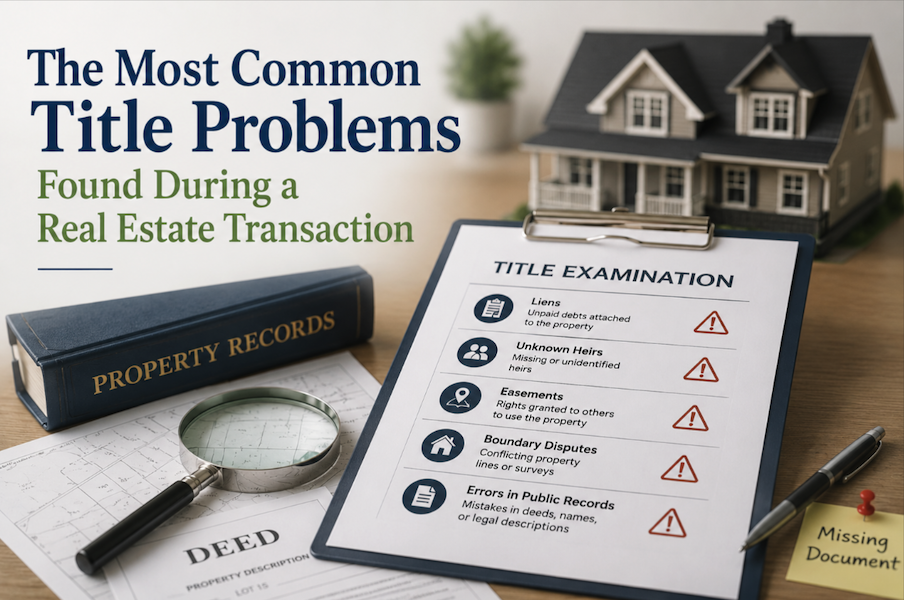
The Most Common Title Problems Found During a Real Estate Transaction
The Most Common Title Problems Found During a Real Estate Transaction
Buying or selling a property in Ohio should be an exciting milestone. But behind the scenes, title professionals are quietly doing some of the most important work of the entire transaction — searching public records to make sure the property's ownership history is clean, clear, and free of surprises.
Sometimes, it isn't.
Title problems are more common than most people realize, and some can bring a real estate closing to a grinding halt. Understanding what these issues look like — and how they get resolved — can help Ohio consumers, agents, loan officers, and business owners move through transactions with greater confidence.
What Is a Title Problem?
A title problem (also called a title defect or cloud on title) is any issue in a property's ownership history that raises questions about who legally owns it or who has a claim against it. These issues must typically be resolved before a lender will fund a loan or a transaction can close.
Here are the most common ones we see in Ohio.
Judgment Liens
When someone owes a debt — whether from a lawsuit, unpaid medical bills, or a contractor dispute — a court can attach a lien to their real property. If a prior owner had a judgment lien that was never satisfied or released, that lien can follow the property. Ohio buyers can unknowingly inherit these obligations without a proper title search.
Tax Liens
Unpaid federal, state, or local taxes can result in liens being placed against a property. Ohio county auditors and the IRS both have authority to record these claims. Tax liens are high-priority encumbrances, meaning they don't simply disappear at closing — they have to be paid off and formally released.
Unreleased Mortgages
It sounds simple, but lenders don't always file a release when a mortgage is paid off. If a prior owner refinanced multiple times or paid off a loan and the lender failed to record the satisfaction, the old mortgage can still appear as an open lien on the title. These require documentation and coordination to clear.
Probate and Estate Issues
When a property owner dies, their real estate must pass through the appropriate legal channels. In Ohio, if a property was transferred outside of probate — or if heirs were overlooked, disputed, or never legally established — the chain of ownership can be incomplete. Estate-related title defects can be among the most time-consuming to resolve.
Breaks in the Chain of Title
Every property has a history of ownership. A break in the chain of title means there's a gap — a deed that was never recorded, a missing grantor, or a transfer that wasn't properly documented. These breaks raise legitimate questions about who actually had the legal authority to sell the property, which is a serious problem for any buyer or lender.
Easements and Encroachments
Easements give third parties the legal right to use a portion of a property — for utility lines, shared driveways, or access to neighboring land. Encroachments occur when a structure (like a fence or building) crosses a property line. Both can affect how you use the property and, in some cases, its market value. Discovering these after closing can lead to costly disputes.
Boundary Disputes
Survey discrepancies and competing property descriptions can create real headaches in Ohio transactions, especially in rural areas or older urban neighborhoods where records may be incomplete or inconsistent. Boundary disputes can affect what's actually being bought or sold.
Fraud and Forged Documents
Title fraud is a real and growing concern. Forged deeds, fraudulent power of attorney documents, and identity theft-related transfers have all appeared in Ohio real estate records. These issues can be difficult to detect, and they create serious legal exposure for buyers and lenders alike.
Errors in Public Records
Clerical mistakes in county recorder offices — misspelled names, incorrect legal descriptions, transposed numbers in a document — can create title defects that have nothing to do with fraud or financial problems. Even small errors can complicate a transaction if they aren't caught and corrected.
How Title Professionals Help
A thorough title search examines decades of public records to identify issues before they become your problem. When defects are found, experienced title professionals work to resolve them — whether that means obtaining lien releases, tracking down missing heirs, correcting errors, or coordinating with lenders and attorneys.
Title insurance adds another layer of protection. An owner's policy protects buyers from covered losses tied to defects that existed before closing, even if those defects weren't discovered during the search.
Work With a Title Agency That Knows Ohio
Title problems don't have to derail your transaction — but they do require expertise to navigate. At American Homeland Title Agency, our team has deep experience handling Ohio real estate transactions of all types, from residential purchases to complex commercial closings.
If you're preparing to buy, sell, or finance property in Ohio, we're here to help you close with confidence. Reach out to our team today to learn how we can support your next transaction.