
What Is a Chain of Title?
What Is a Chain of Title?
When you buy a home in Columbus or close a commercial deal in Cleveland, one phrase keeps coming up in the paperwork: chain of title. It sounds like legal jargon, but the concept is straightforward — and understanding it could save you from a serious headache down the road.
The Basics: What Does Chain of Title Mean?
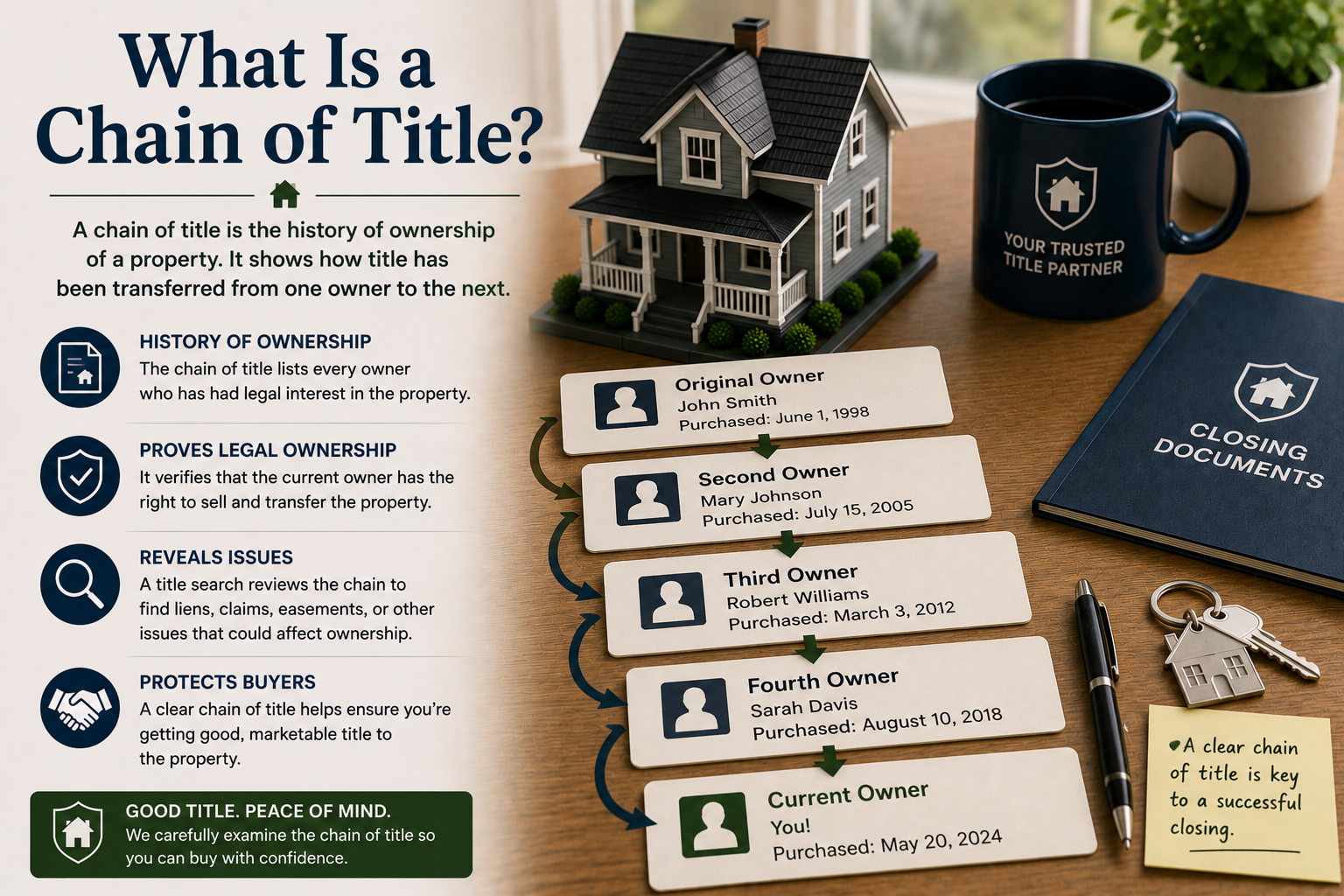
A chain of title is the complete, chronological history of ownership for a piece of property. Think of it as a paper trail that traces every transfer of ownership from the very first recorded deed all the way to the current seller.
Every time a property changes hands — whether through a sale, inheritance, foreclosure, or gift — that transfer gets recorded with the county recorder's office in Ohio. Those recorded documents, strung together in order, form the chain. If the chain is clean and unbroken, everyone involved in the transaction can feel confident that the seller actually has the legal right to sell.
Why Does It Matter in Ohio Real Estate?
Ohio follows a recording system that relies heavily on public records. When you buy a property in Cincinnati, Toledo, or anywhere across the state, your legal ownership depends on whether the chain of title is clear.
A clean chain protects you from unexpected claims by:
- Previous owners who may not have properly signed off on a transfer
- Heirs of a deceased owner whose interest was never legally resolved
- Lenders who filed a lien that was never formally released
- Contractors who recorded a mechanic's lien after unpaid work
Without a clear chain, someone else could potentially step forward and claim a legal interest in your property — even after you've moved in or opened your business.
What Can Go Wrong: Gaps and Defects
A chain of title defect is any break, error, or inconsistency in that ownership history. These problems are more common than most people expect, and they come in many forms.
Gaps in ownership happen when a deed is missing from the public record. For example, a property in Dayton might show an owner in 1987 and then a different owner in 2003, with no recorded transfer in between. Who owned it during those years? That unanswered question is a gap.
Forgery or fraud occasionally surfaces in title searches, particularly with older properties. A deed could have been signed by someone who didn't actually own the property or signed under false pretenses.
Errors in legal descriptions are surprisingly common. If a deed incorrectly describes the boundaries of a parcel, it can create disputes between neighbors or make the title legally uncertain.
Unreleased liens are another frequent issue. A homeowner pays off a mortgage but the lender never files the release with the county recorder. The lien still shows up in the public record and has to be resolved before the property can be sold cleanly.
Probate issues arise when a property owner dies and the estate isn't properly administered. Ohio law has specific requirements for how property passes through an estate, and skipping steps can cloud the title for years.
What a Title Search Actually Uncovers
Before any Ohio real estate closing, a title professional conducts a title search — a thorough review of public records going back decades, sometimes longer. This search typically examines deeds, mortgages, court judgments, tax records, and other documents recorded with county offices.
The goal is to identify any issues before they become your problem. For a residential buyer in Akron, this might mean catching an old home equity line of credit that was never discharged. For a business owner purchasing commercial space in Columbus, it might reveal an easement that restricts how you can use the property.
A title search gives everyone at the closing table — the buyer, the seller, the lender, and the agents — a clear picture of what they're working with.
How Title Insurance Fills the Gaps
Even the most thorough title search can't catch everything. Some defects are buried in records that weren't properly indexed, or they involve fraud that left no visible trace. That's where title insurance comes in.
Title insurance is a one-time premium paid at closing that protects you against covered losses arising from title defects — including problems that existed before you bought the property but weren't discovered during the search.
Ohio real estate transactions typically involve two types of policies:
- Owner's policy — protects the buyer's ownership interest
- Lender's policy — protects the mortgage lender's financial interest
For Ohio homebuyers, an owner's policy means that if someone files a claim against your property based on a prior ownership issue, your title insurer steps in to defend your title and cover losses up to your policy amount. For loan officers and lenders, the lender's policy protects the investment in the event a title defect jeopardizes the mortgage.
Why Agents, Lenders, and Business Owners Should Pay Attention
Real estate agents rely on a clean chain of title to get deals to the closing table without last-minute surprises. A title defect discovered late can delay or derail a transaction entirely.
Loan officers need a clear title before any lender will fund a mortgage. No clean title, no loan.
Ohio business owners purchasing commercial property face even higher stakes. A title problem on a commercial acquisition can affect your financing, your ability to develop or renovate, and your long-term investment value.
The Bottom Line
A chain of title tells the story of a property's ownership — and that story needs to be complete. Whether you're buying your first home in suburban Cleveland or expanding your business in downtown Columbus, understanding this concept helps you make smarter, more confident decisions.
At American Homeland Title Agency, we work to make sure that story is clear before you sign on the dotted line.