
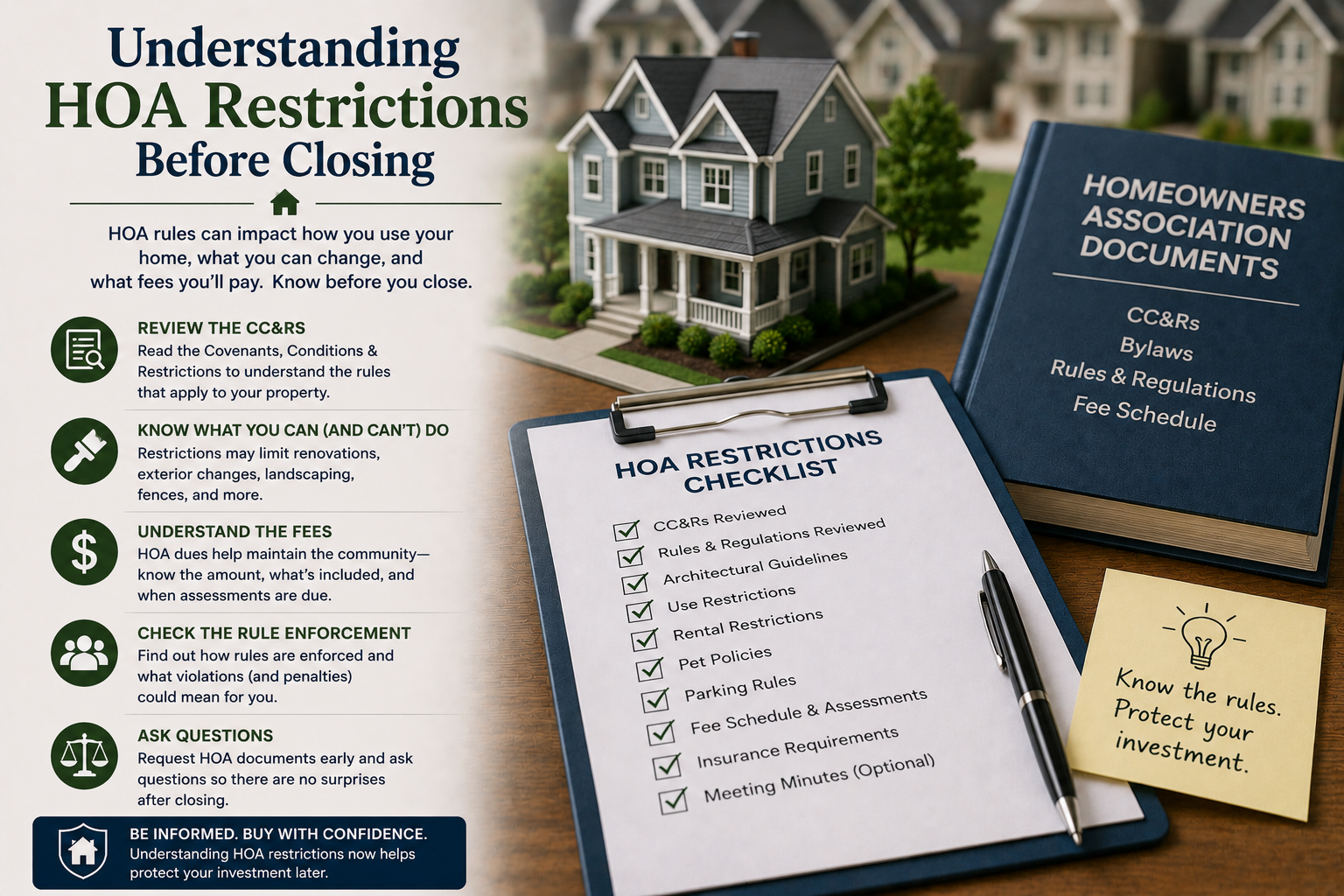
Understanding HOA Restrictions Before Closing
Understanding HOA Restrictions Before Closing
Buying a home in an HOA community comes with a set of rules that go far beyond what's listed on the MLS. For Ohio buyers, real estate agents, loan officers, and business owners, understanding those restrictions before closing isn't just smart — it's essential. Missing key HOA details can derail a deal, create financing headaches, or leave a new homeowner surprised by rules they never knew existed.
Here's what you need to know before you reach the closing table.
What Is an HOA, and Why Do the Rules Matter?
A homeowners association (HOA) is a governing body that manages a residential community through a set of rules called Covenants, Conditions, and Restrictions (CC&Rs). In Ohio, HOA communities are common in planned developments, condominiums, townhomes, and newer subdivisions across the state — from Columbus suburbs like Dublin and Westerville to communities in Cleveland, Cincinnati, Dayton, and beyond.
When you buy into an HOA community, you're agreeing to follow those rules. Violating them can result in fines, forced compliance, or even liens against the property. That's why reviewing the governing documents before closing is one of the most important steps in any Ohio real estate transaction.
Types of Restrictions Buyers Should Watch For
HOA documents can be lengthy and dense, but several key areas deserve close attention:
Rentals and Short-Term Leasing
Many Ohio HOAs restrict or prohibit renting units — including short-term rentals through platforms like Airbnb or VRBO. If a buyer plans to use the property as an investment or rental property, this is a deal-breaker worth finding out before, not after, closing.
Renovations and Exterior Changes
Want to add a fence, paint the front door a different color, or install a deck? Some HOAs require prior approval for exterior modifications. These restrictions can limit personalization and add time and cost to renovation plans.
Parking Rules
Restrictions on parking can be surprisingly detailed — limiting the number of vehicles, prohibiting commercial vehicles or trailers, or designating specific spots. For buyers with multiple cars or work trucks, these rules matter.
Home-Based Businesses
Ohio has seen significant growth in remote work and entrepreneurship. But many HOA communities restrict or prohibit operating a business from your home, especially if it involves client traffic, visible signage, or commercial vehicles on the property.
Signage
Real estate agents know this one well — some HOAs prohibit or limit yard signs, which can affect how a property is marketed when it eventually sells.
Pets and Landscaping
Pet restrictions (size, breed, or number) and landscaping requirements are common and can affect quality of life in ways buyers don't always anticipate.
How HOA Rules Can Affect Financing
HOA restrictions don't just affect how you live in a property — they can affect whether you can finance it at all.
For condominium purchases, FHA and VA loans require the development to meet specific approval criteria. In Ohio, if a condo association isn't FHA- or VA-approved, buyers using those loan programs may not be able to purchase in that building. Loan officers need to identify HOA status early in the process to avoid last-minute financing disruptions.
Pending special assessments — large fees levied by the HOA for shared repairs or improvements — can also impact a buyer's finances and may be flagged during underwriting. These assessments can run into thousands of dollars and may transfer to the new owner at or after closing.
Questions to Ask Before You Close
Whether you're a buyer, agent, or loan officer, these steps can help surface issues early:
- Request the full HOA documents — CC&Rs, bylaws, rules and regulations, and meeting minutes
- Ask about current and pending special assessments
- Confirm the monthly HOA dues and what they cover
- Check HOA approval status for FHA/VA financing if applicable
- Review rental and business use restrictions if those factors affect the buyer's plans
- Ask about reserve fund health — a poorly funded HOA reserve can signal future assessment risk
In Ohio, sellers are generally required to disclose HOA membership and provide governing documents, but getting them reviewed early gives buyers time to ask questions and make informed decisions.
Don't Let HOA Details Catch You Off Guard at the Table
Surprises at closing are stressful for everyone — buyers, agents, and loan officers alike. HOA restrictions are one area where a little due diligence upfront goes a long way.
At American Homeland Title Agency, we understand Ohio real estate inside and out. Our experienced closing team helps ensure that all parties have the information they need well before closing day — so there are no last-minute complications standing between your client and the keys to their new home.
Ready to work with a title partner who keeps the process smooth from contract to close? Contact American Homeland Title Agency today to learn how we support Ohio buyers, real estate professionals, and lenders every step of the way.