
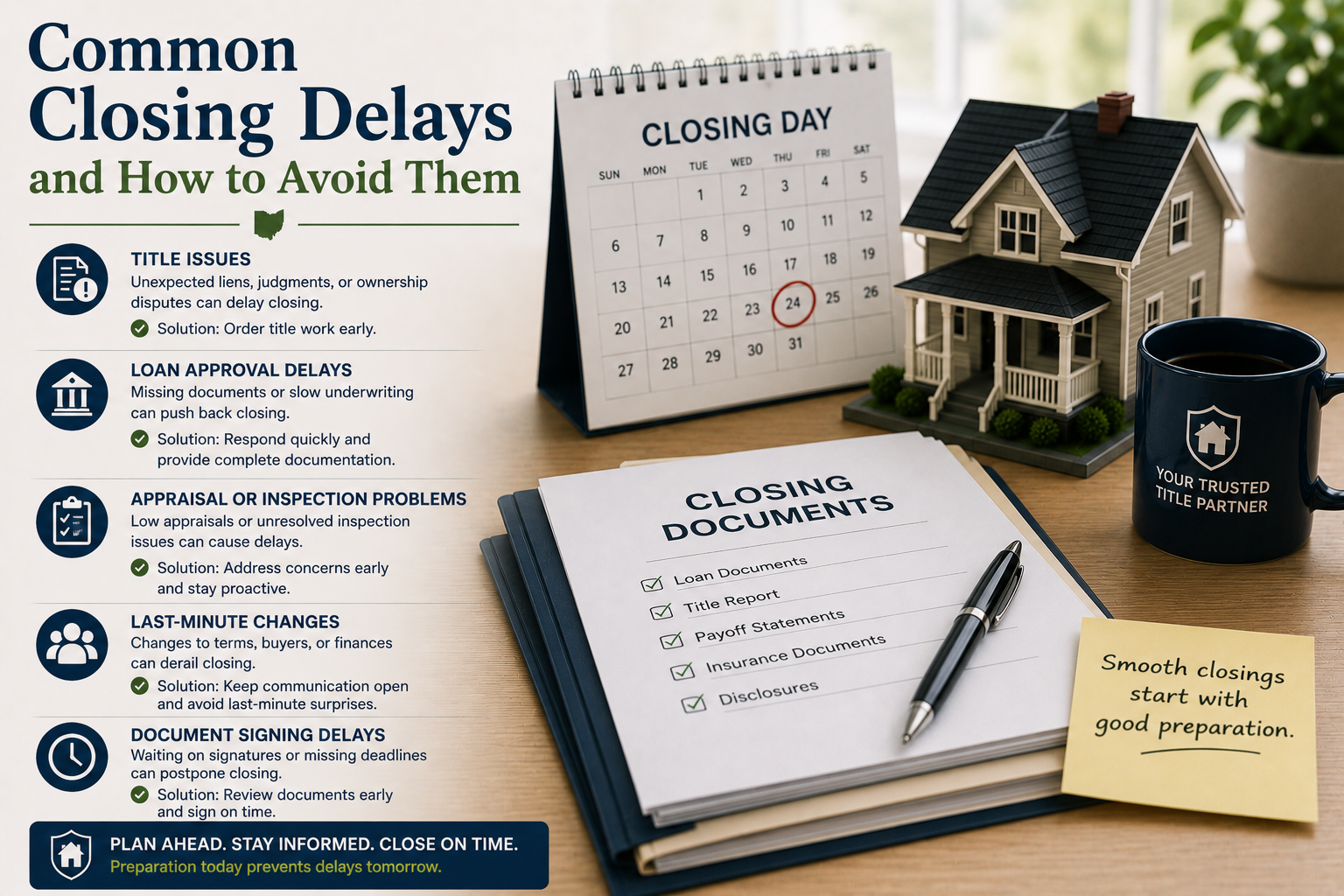
Common Closing Delays and How to Avoid Them
Common Closing Delays and How to Avoid Them
You've found the right property, agreed on a price, and everything feels like it's falling into place. Then closing day gets pushed back — sometimes more than once. Closing delays are one of the most frustrating parts of any real estate transaction, and they happen more often than most people expect. The good news is that many of the most common causes are avoidable with the right preparation and the right team.
Whether you're an Ohio homebuyer, seller, real estate agent, loan officer, or business owner navigating a commercial transaction, understanding what causes delays — and how to get ahead of them — can save you time, money, and a lot of stress.
Title Issues
Title problems are among the leading causes of closing delays in Ohio. These include things like unresolved liens, errors in public records, boundary disputes, or ownership claims from previous transactions. If a title search uncovers an issue, it has to be resolved before closing can move forward.
How to avoid it: Start the title search early — ideally as soon as the purchase agreement is signed. Working with an experienced title agency means potential issues get flagged and addressed quickly rather than discovered at the last minute.
Financing and Lender Delays
Even after a buyer is pre-approved, the loan process can hit unexpected snags. Lenders may request additional documentation, underwriters may raise questions, or interest rate changes may affect approval terms. These back-and-forth exchanges can push closing back by days or even weeks.
How to avoid it: Buyers should gather financial documents early and respond to lender requests as quickly as possible. Loan officers who communicate proactively with buyers, agents, and title companies help keep the process on track. Avoid making major financial moves — like opening new credit accounts or changing jobs — between pre-approval and closing.
Appraisal Gaps
When a property appraises for less than the agreed purchase price, it creates an appraisal gap. The buyer's lender will typically only finance up to the appraised value, which means the deal needs to be renegotiated or the buyer must cover the difference out of pocket. Either path takes time.
How to avoid it: Sellers should price their properties realistically. Agents on both sides should be prepared to act quickly if an appraisal comes in low. Having a plan in place before this happens makes the resolution smoother.
Inspection-Related Negotiations
Home inspections often reveal repair needs, and negotiations over who pays for what can stall a deal. If the parties can't reach an agreement, closing gets pushed or the transaction falls apart entirely.
How to avoid it: Set clear expectations before the inspection. Sellers who address known issues ahead of time reduce the risk of surprises. When repairs are needed, both sides should aim to resolve negotiations quickly — not let them drag on.
Missing or Incomplete Documents
Closing requires a significant amount of paperwork: purchase agreements, loan documents, insurance policies, identification, payoff statements, and more. A single missing form can halt the process.
How to avoid it: Create a checklist and start collecting documents well before closing. Title agencies and loan officers should send clear, early instructions to all parties about what's needed and when. Don't wait for someone to ask — be proactive.
Survey or Lien Problems
Surveys can reveal encroachments, easements, or boundary issues that weren't known before. Unpaid liens — from contractors, tax authorities, or previous owners — can also surface and must be resolved before title can transfer.
How to avoid it: Order a property survey early in the process if one isn't available. A thorough title search will catch most lien issues, but it needs time to be completed and for any problems to be cleared up. Sellers should review their own property for any outstanding obligations before listing.
Last-Minute Changes
Changing the closing date, switching lenders, or adjusting the terms of the deal late in the process creates a ripple effect that delays everything. Even small changes can require updated documents, new approvals, or rescheduled appointments.
How to avoid it: Lock in decisions early and communicate any changes as soon as possible. Every party — buyer, seller, agent, lender, and title company — should be informed immediately when something shifts.
Scheduling and Communication Breakdowns
Sometimes a delay isn't tied to a specific legal or financial issue — it's simply poor coordination. A closing can be pushed back because a notary isn't available, a party can't be reached, or documents weren't sent in time.
How to avoid it: Keep communication lines open throughout the entire process. Confirm appointments early, use shared timelines when possible, and make sure everyone knows their responsibilities. A responsive, organized title agency plays a key role in keeping all the moving parts aligned.
Stay Ahead of the Closing Table
Most closing delays are preventable. The common thread running through all of them is early action and clear communication. Starting the title work sooner, staying organized with documentation, keeping all parties informed, and working with a reliable title agency can dramatically reduce the chances of hitting a roadblock.
At American Homeland Title Agency, we work with Ohio consumers, agents, loan officers, and business owners to keep transactions moving smoothly from contract to close. When everyone is prepared and working together, closing day can go exactly as planned.