
Buying New Construction: What’s Different From a Resale Closing
Buying New Construction
What's Different From a Resale Closing
You're Often Working With the Builder's Contract, Not a Standard Purchase Agreement
Resale transactions typically use a standard state or local real estate association purchase contract that's fairly consistent from one deal to the next, regardless of which agents or attorneys are involved. New construction purchases, by contrast, usually run on the builder's own proprietary contract, drafted by or for the builder's legal team, which can include terms considerably more favorable to the builder than a standard resale agreement would be — different contingency structures, different remedies if the builder misses the promised completion date, and different rules around deposits, cancellation, and change orders. Read a new construction contract just as carefully as you'd read any other significant legal document you didn't draft yourself, and don't assume it works like a typical resale agreement simply because the basic transaction — buying a house — feels broadly familiar. If anything in the contract feels one-sided or unclear, ask the builder's sales representative for a plain-language explanation, and consider having a real estate attorney review the document before you sign, given how much more builder-favorable these contracts tend to be.
Financing and Deposit Timelines Work Differently
New construction deposits are often considerably larger than a typical resale earnest money deposit, and they may be due in installments tied to specific construction milestones rather than as a single deposit paid at contract signing. Financing timelines are also structured differently — if the home isn't built yet, your rate lock, loan approval, and closing date all have to align with an ongoing construction timeline that can shift due to weather delays, permitting backlogs, or material and labor supply issues largely outside anyone's direct control. Ask early in the process how your deposits are held, whether they're refundable and under exactly what conditions, and how the builder typically handles financing extensions or rate lock extensions if construction ultimately runs longer than originally projected. Get your lender's confirmation in writing about how a construction delay would affect your rate lock, since a lapsed lock can mean requalifying at a materially different rate than the one you originally budgeted around.
The Title and Closing Process Has Its Own Wrinkles
A resale closing verifies title on a property that already has an established ownership history stretching back through prior owners. A new construction closing instead has to confirm a clean transfer of title from the developer or builder, verify that no mechanic's liens have been filed by any of the subcontractors or material suppliers who worked on the home, and confirm that the property has been properly platted, with any applicable easements, plat restrictions, or homeowners association governing documents fully in place and disclosed to you before closing. Title insurance is just as important on new construction as it is on a resale purchase — arguably more so, given the sheer number of parties involved in building the home, including subcontractors, suppliers, and the developer itself, any of whom could theoretically assert a claim against the property if not properly released. Ask your title company early in the process how they handle new construction closings specifically, since the lien search and closing preparation for a newly built home differ meaningfully from a standard resale.
Inspections Serve a Different Purpose
On a resale, an inspection primarily uncovers problems that have accumulated from years of wear, deferred maintenance, and prior ownership decisions. On new construction, an independent inspection — even though the home is brand new and was built to current code — instead checks for genuine construction defects, incomplete or rushed work, and code compliance issues that can occur during any build, regardless of the builder's overall reputation. Many buyers skip this step entirely, assuming "new" automatically means "perfect," but an independent inspector working exclusively for you, rather than as part of the builder's own internal quality control process, will often catch issues the builder's team genuinely missed or simply overlooked during their own review. Scheduling this inspection before your final walkthrough, rather than after, gives you time to add any significant findings to your punch list instead of discovering them only after you've already moved in. The relatively modest cost of an independent inspection is generally well worth it given how much larger a structural or systems issue can be to correct once you've taken ownership.
The Walkthrough and Punch List Process
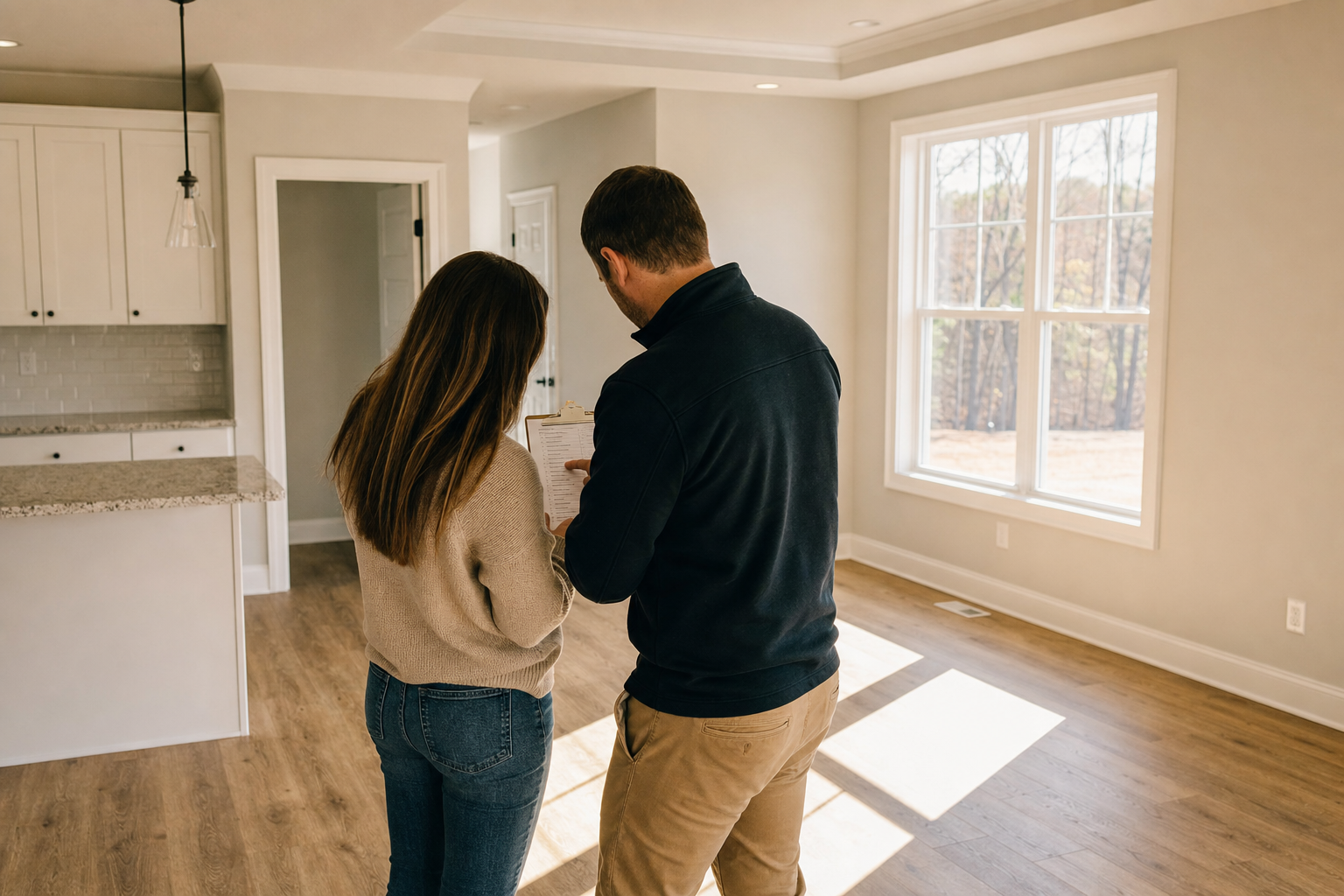
New construction closings typically include a pre-closing walkthrough where you and a builder representative jointly create a "punch list" of remaining items to be completed or corrected before, or shortly after, closing — things like touch-up paint, minor fixture adjustments, or small trim and finish work left unfinished. Get every single punch list item documented in writing with a specific expected completion timeframe attached to it, and make sure you clearly understand whether the builder expects to complete those items before closing or only after you've already taken possession of the home. Unlike a resale, where unresolved repair requests are usually fully settled before anyone signs anything, new construction purchases often close with a short list of items still genuinely pending, so real clarity on that list up front protects you well after you've already moved in. Take your own photos and detailed notes during the walkthrough, in addition to whatever the builder documents, so you have your own independent record if a disagreement arises later about whether a punch list item was actually completed.
Provided by American Homeland Title Agency
For advertising purposes only.
Equal Housing Opportunity — we support fair and equal access to housing for all, regardless of race, color, religion, sex, handicap, familial status, or national origin.