
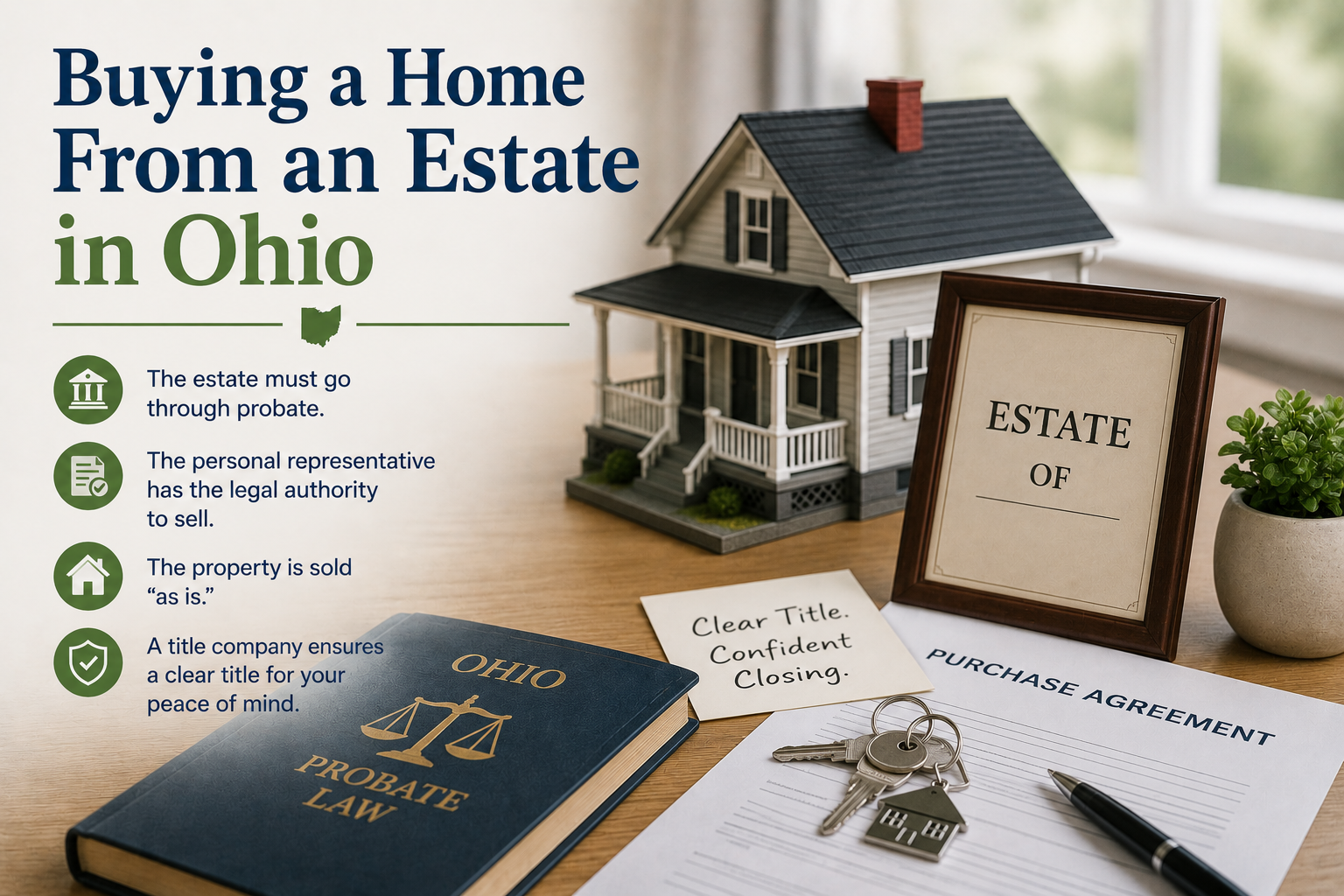
Buying a Home From an Estate in Ohio
Buying a Home From an Estate in Ohio
Purchasing a home from an estate can be a great opportunity — but it comes with a different set of steps than buying from a typical seller. If you're an Ohio homebuyer, real estate agent, loan officer, or investor, understanding how estate sales work can save you from surprises and help your transaction move forward without unnecessary delays.
What Makes an Estate Sale Different?
When a homeowner passes away, their property becomes part of their estate. Before that home can be sold, certain legal steps usually need to happen first. Unlike a traditional sale where the owner simply signs the paperwork, an estate sale involves a legal process that determines who has the authority to sell, whether any debts are tied to the property, and sometimes whether a court needs to approve the transaction.
This doesn't mean estate purchases are something to avoid. Many buyers find great value in estate properties. It just means going in with the right knowledge matters.
Understanding Probate in Ohio
In Ohio, when someone dies with real estate in their name, that property often goes through probate — a court-supervised process that validates the person's will (if one exists), appoints an administrator or executor, and settles any outstanding debts before assets can be distributed or sold.
Not every property goes through probate. If the home was jointly owned with right of survivorship, held in a trust, or transferred through a transfer-on-death (TOD) affidavit, it may pass to the new owner without court involvement. But when probate is required, it adds a layer of process that buyers and agents need to plan around.
Ohio's probate process is handled through the county Probate Court where the deceased person lived. Timelines can vary — some estates move relatively quickly while others take several months or longer, especially if there are disputes, multiple heirs, or complex assets involved.
Who Has the Authority to Sell?
This is one of the most important questions in any estate transaction. Not everyone connected to a deceased person's estate has the legal right to sign a purchase contract or deed.
In most cases, the person authorized to sell is the executor (named in the will) or the administrator (appointed by the court when there is no will). Before proceeding too far in the process, it's essential to confirm that the right person is actually authorized to sell — and that the court has granted them that authority if required.
In some Ohio estate sales, particularly when the estate is going through full probate, the sale itself may need court approval before it can close. This means even after you reach an accepted offer, you could be waiting on a court hearing. Buyers and agents should build this potential timeline into their expectations upfront.
Title and Lien Considerations
Estate properties can sometimes carry title complications that don't show up in a regular sale. Unpaid medical bills, outstanding mortgages, back taxes, liens from creditors, and even disputes among heirs can all affect the title.
That's why a thorough title search is especially important in estate transactions. A title search will surface any claims against the property so they can be resolved before closing. In Ohio, title agencies work to identify these issues early so that buyers receive clear, insurable title at closing.
Title insurance is highly recommended in any home purchase, but it's particularly valuable when buying from an estate. It protects your ownership rights if a title issue surfaces after you've already closed.
Disclosures and "As-Is" Sales
Ohio law requires sellers to disclose known material defects in a property. However, estate executors and administrators often have limited or no personal knowledge of the home's condition. As a result, many estate sales are marketed "as-is," with minimal or no disclosures.
This doesn't mean you can't do your due diligence. Buyers should always conduct a professional home inspection on an estate property. Going in with eyes open about the property's condition helps you make a confident decision and avoid costly surprises after closing.
Financing an Estate Purchase
Most conventional financing works fine for estate purchases, but lenders may have questions about the transaction structure. Loan officers should be prepared to review the letters of authority granted to the executor or administrator, and understand how court approval (if required) affects the expected closing date.
Clear communication between the buyer's lender, the real estate agent, and the title agency keeps everything on the same page and reduces last-minute delays.
Why Working With a Title Agency Matters
Estate transactions have more moving parts than a standard home sale — and that's exactly where an experienced title agency becomes a valuable partner. From reviewing the chain of title and identifying liens, to coordinating with the estate's legal representatives and making sure the deed is properly executed, a title agency helps ensure the transaction is handled correctly from contract to closing.
At American Homeland Title Agency, we work closely with Ohio buyers, sellers, agents, and lenders on transactions of all types — including estate sales. We understand the nuances involved and we're here to help guide every party through the process with clarity and confidence.
If you're involved in an Ohio estate property transaction, reach out to our team. We'll help make sure the path to closing is as smooth as possible.