
Buying a Farm or Land in Ohio
Buying a Farm or Land in Ohio
Title Considerations You Won't Expect
Mineral Rights Aren't Always Part of the Deal
In Ohio, especially in the eastern and southeastern parts of the state, it's common for mineral rights (oil, gas, and coal) to have been severed from the surface estate decades ago and sold or transferred separately from the land itself. That means you can buy 40 acres of beautiful farmland and not actually own what's underneath it — a prior owner, or their heirs several generations removed, may still hold the rights to whatever lies beneath the surface. A thorough title search traces the mineral history separately from the surface history, going back through the chain of title to identify any severed interests. Your title company should flag outstanding severed mineral interests, old oil and gas leases, or pooling agreements that could affect your ability to build, drill a well, or even obtain standard title insurance coverage on the minerals themselves. If mineral rights matter to you — whether because you want them intact or simply want clarity — raise the issue with your title company and attorney well before you're under contract, not after.
Easements, Access, and Landlocked Parcels
Rural and agricultural parcels frequently rely on access easements, shared driveways, or right-of-way agreements that were never neatly recorded, especially on land that's been in a family for generations and passed down informally. A title search should confirm you actually have legal, recorded access to a public road — not just a path that's been used informally for 50 years on the strength of a neighborly understanding that may not survive a change in ownership. Landlocked parcels, or parcels with only informal access, can be difficult to finance, insure, and eventually resell, so this is worth confirming early rather than assuming it. Utility easements for power lines, pipelines, or agricultural tile drainage systems are also common on farm parcels and can limit where you're able to build a home, barn, or outbuilding, or what improvements you can make on certain portions of the property. Understanding exactly what's recorded against the parcel — and what isn't — protects you from surprises well after closing.
Agricultural Use Valuation and Tax History
Many Ohio farm properties are enrolled in the Current Agricultural Use Valuation (CAUV) program, which taxes qualifying farmland based on its agricultural production value rather than its full market value — often a significant, multi-thousand-dollar annual tax savings for the current owner. But CAUV status doesn't automatically transfer with a sale; the new owner generally has to reapply and continue qualifying agricultural use to keep the reduced valuation going forward. Converting the land to a non-agricultural use, or letting it sit idle past certain thresholds, can trigger recoupment of the tax savings for the prior three years, arriving as an unexpected bill after closing. Buyers should confirm CAUV enrollment status with the county auditor before closing, understand what continuing to farm (or not) will mean for the ongoing tax bill, and factor any potential recoupment exposure into their purchase decision if they're planning a different future use for the land.
Boundary Lines, Surveys, and Legacy Descriptions
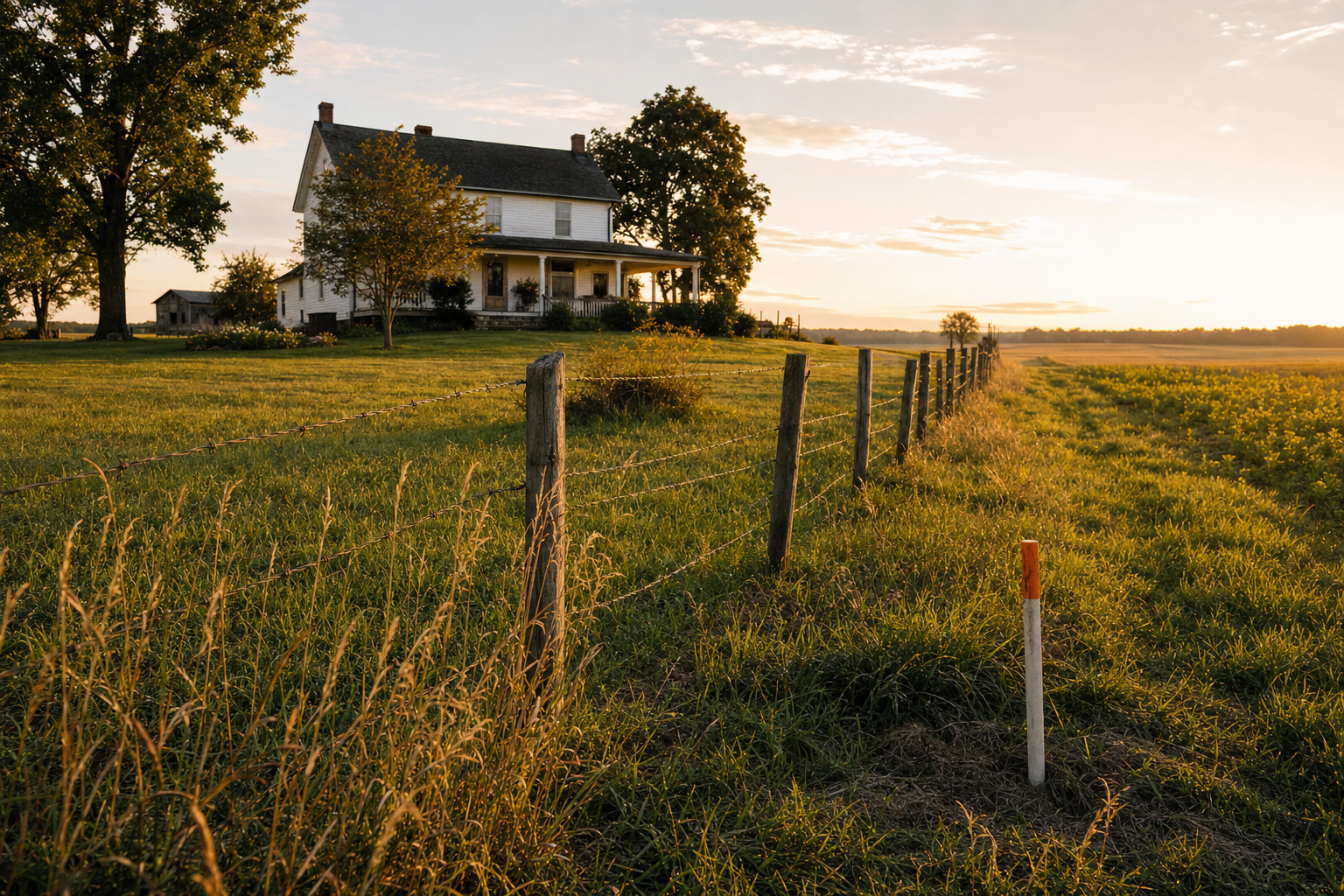
Older rural deeds sometimes describe boundaries using metes-and-bounds language tied to physical landmarks — a specific tree, a creek bend, a fence post — rather than a modern surveyed description with fixed coordinates. Over decades, those landmarks can shift, disappear, or become ambiguous, making it genuinely difficult to know exactly where a boundary line sits without a fresh survey. Fence lines that don't match recorded boundaries are common on land that's changed hands multiple times or been informally divided among family members over the years, and disputes over exactly where one parcel ends and the next begins are more common on acreage than on a typical suburban lot. A current survey is often worth the added cost on farm and land purchases, even when it wasn't legally required, because unresolved boundary discrepancies can complicate financing, delay a future resale, or derail a future subdivision of the parcel into smaller lots.
Working With a Title Company That Knows Rural Land
Farm and land purchases carry title complexities that a typical residential closing simply doesn't involve, from mineral severances to agricultural easements to CAUV recoupment exposure to legacy boundary descriptions. Choose a title company experienced with rural Southwest Ohio parcels specifically, since local knowledge of county recording practices and common historical issues in a given area genuinely speeds up the process and catches problems a less-experienced examiner might miss. Ask direct questions about mineral rights, easements, and access before you're under contract, and build enough time into your purchase agreement for a survey and a full title examination rather than rushing to the standard residential timeline. The extra diligence upfront is far cheaper, and far less stressful, than discovering an access or mineral rights problem after you've already closed and moved in.
Provided by American Homeland Title Agency
For advertising purposes only.
Equal Housing Opportunity — we support fair and equal access to housing for all, regardless of race, color, religion, sex, handicap, familial status, or national origin.