
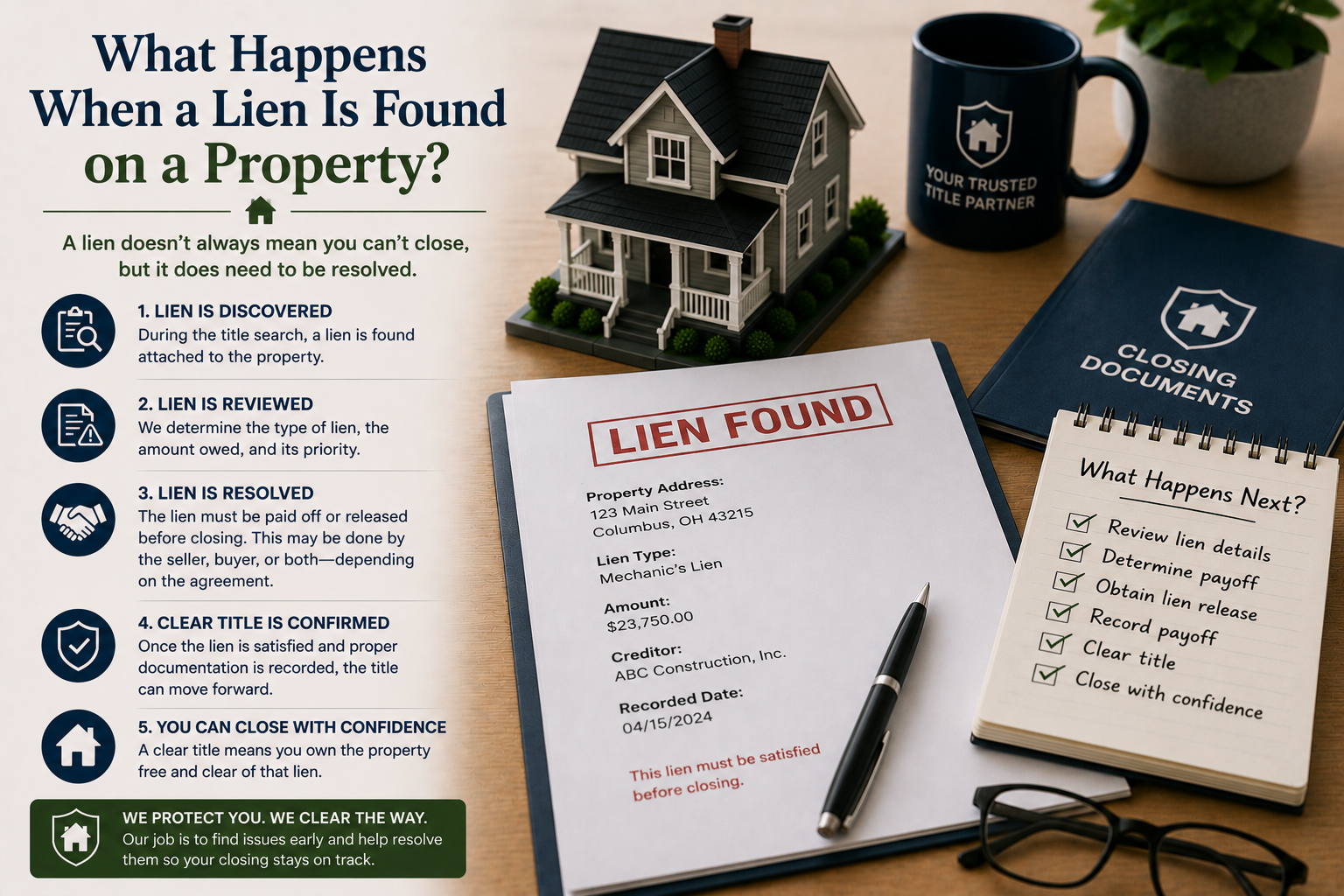
What Happens When a Lien Is Found on a Property?
What Happens When a Lien Is Found on a Property?
Buying or selling a property in Ohio comes with a lot of moving parts. One issue that can stop a transaction in its tracks — or at least slow it down — is discovering a lien on the property. If you're a buyer, seller, real estate agent, loan officer, or business owner involved in a real estate deal, understanding what a lien is and what happens when one surfaces can save you a lot of stress.
What Is a Lien?
A lien is a legal claim against a property, typically used as security for a debt or obligation. It means someone — a creditor, contractor, government agency, or other party — has a recorded interest in that property. Until the lien is resolved, it can cloud the title and prevent the property from being transferred cleanly to a new owner.
Liens attach to the property itself, not just the person who owns it. That's an important distinction. Even if a seller was unaware of a lien, it can still show up during a title search and affect the sale.
Common Types of Liens in Ohio
Not all liens are the same, and Ohio properties can carry several different types:
- Mortgage liens are the most common. When a homeowner takes out a loan to purchase property, the lender places a lien on it until the mortgage is paid off.
- Mechanic's liens (also called construction liens in Ohio) are filed by contractors, subcontractors, or suppliers who weren't paid for work or materials provided to the property.
- Tax liens can be placed by federal, state, or local governments when property taxes or income taxes go unpaid.
- Judgment liens arise from court rulings, such as unpaid debts or civil judgments, that have been attached to a person's real property.
- HOA liens may be filed by a homeowners association for unpaid dues or assessments.
Each type carries its own resolution process, and some are more straightforward to clear than others.
How a Lien Is Discovered
This is where title agencies play a critical role. Before a real estate transaction closes in Ohio, a title search is conducted. A title professional reviews public records — including court filings, tax records, and recorded documents — to identify any claims or encumbrances tied to the property.
When a lien is found, it's reported to all relevant parties: the buyer, seller, real estate agents, and lender. The title agency documents the findings and helps coordinate what needs to happen next.
What Happens After a Lien Is Found
Discovering a lien doesn't automatically kill a deal, but it does require attention. Here's what typically follows:
The parties assess the lien. First, everyone involved needs to understand what the lien is, who filed it, and how much is owed. In some cases, liens are outdated or were already paid but never properly released — a relatively simple fix. In others, a legitimate debt is outstanding and must be settled.
The seller is usually responsible for clearing it. In most Ohio transactions, the seller is expected to satisfy any liens before or at closing. This often means paying off the debt from the proceeds of the sale. The title agency can help facilitate this by coordinating payoff amounts and ensuring the lien release is properly recorded.
Closing timelines can shift. If a lien is discovered late in the process, it can delay closing. Resolving a mechanic's lien, for instance, may require negotiation with a contractor or legal steps if the amount is disputed. Tax liens may involve working with the IRS or Ohio Department of Taxation. Buyers and agents should be prepared for the possibility of an adjusted closing date.
Financing may be affected. Lenders won't fund a loan on a property with an unresolved lien. Mortgage lenders require a clear title before issuing funds, so any outstanding liens must be addressed before financing is finalized.
Title insurance provides an added layer of protection. Even with a thorough title search, some issues can surface after closing. An owner's title insurance policy protects buyers against losses from covered title defects that weren't identified during the search, including certain lien-related claims.
The Role of Your Title Agency
A knowledgeable title agency does more than search records — they help guide everyone through the resolution process. When a lien surfaces, the title team works with the parties involved to track down lien holders, obtain payoff statements, verify releases, and confirm that the title is clear before closing proceeds. That coordination can be the difference between a deal falling apart and one that closes successfully.
The Bottom Line
Finding a lien on a property is more common than most people expect. What matters is how quickly and carefully it's handled. With an experienced title agency on your side, a lien doesn't have to mean the end of a transaction — it just means there's a step to work through before you get to closing day.