
The Difference Between a Warranty Deed and Quit Claim Deed
The Difference Between a Warranty Deed and Quit Claim Deed
When property changes hands in Ohio, the type of deed used matters far more than most people realize. Whether you're buying your first home in Columbus, transferring a rental property in Cleveland, or handling a commercial transaction in Cincinnati, the deed you use determines how much legal protection you actually receive. Two of the most common deeds in Ohio real estate are the warranty deed and the quit claim deed — and they are not interchangeable.
Here's what you need to know about each one.
What Is a Warranty Deed?
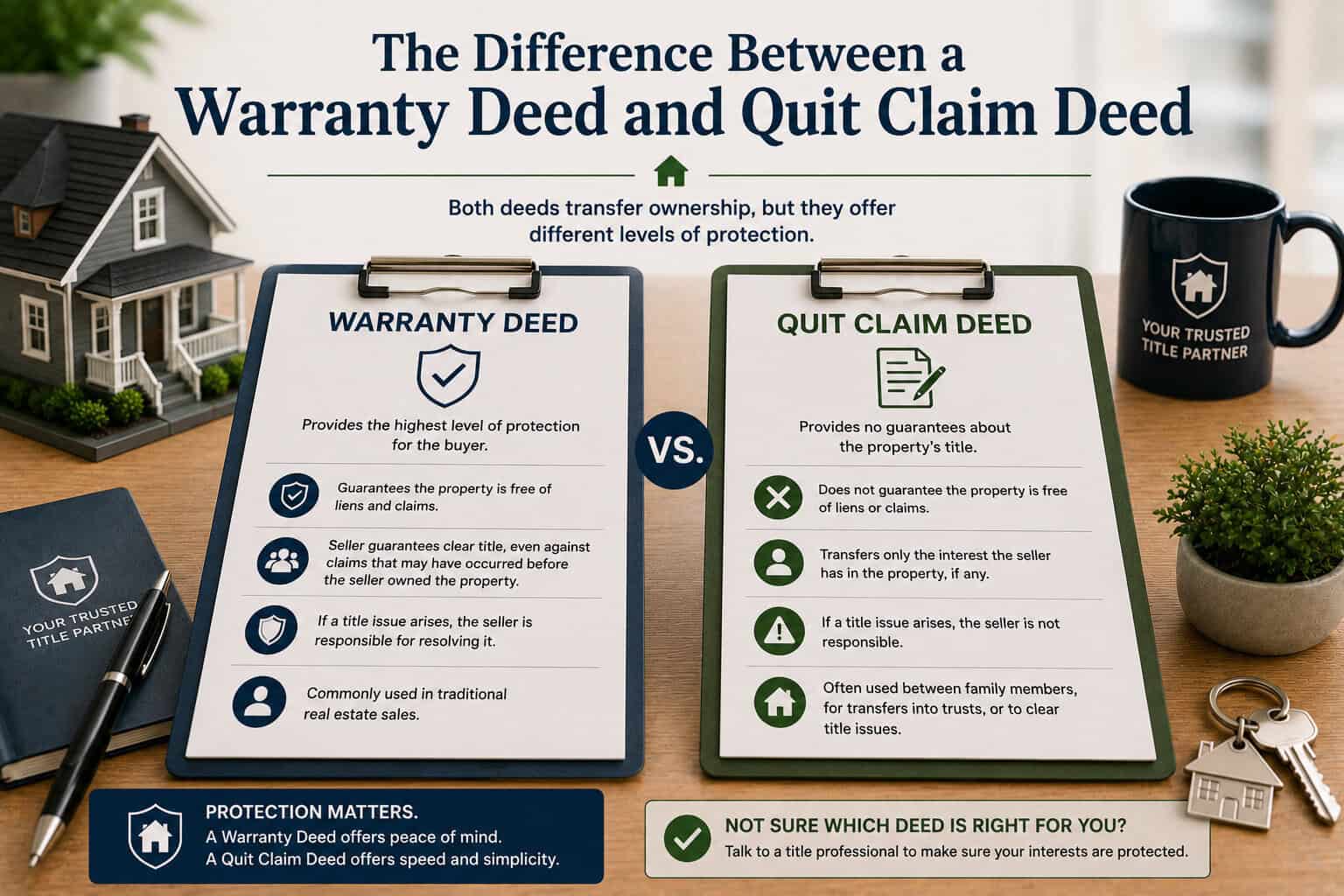
A warranty deed is the gold standard in Ohio property transfers. When a seller conveys property using a warranty deed, they are making a legal promise — or "warranty" — that they hold clear title to the property and have the right to sell it. More importantly, they're guaranteeing that no one else can come forward with a legitimate claim against the property, even from events that occurred before the seller owned it.
Think of it this way: if you buy a home in Dayton using a warranty deed and a creditor later surfaces claiming a lien was attached to the property decades ago, the seller is legally obligated to defend your ownership and cover any losses that result from that prior claim.
There are two main types:
- General Warranty Deed — Covers the full history of the property, not just the period the seller owned it. This offers the broadest protection and is the most common deed used in traditional Ohio home sales.
- Limited Warranty Deed — Only covers claims that arose during the seller's period of ownership. Any title issues predating their ownership are not guaranteed.
Buyers in Ohio's residential market almost always prefer a general warranty deed because it provides the most comprehensive protection.
What Is a Quit Claim Deed?
A quit claim deed works very differently. When someone transfers property using a quit claim deed, they are conveying only whatever interest they may have in the property — nothing more, nothing less. There are no warranties, no guarantees, and no promises about the state of the title.
In plain terms: a quit claim deed says, "Whatever ownership I have in this property, I'm giving it to you." If it turns out they had no valid ownership — or if a lien, judgment, or competing claim surfaces later — the recipient has no legal recourse against the grantor.
This might sound alarming, but quit claim deeds serve a real and practical purpose. They're commonly used in situations where:
- Spouses transfer property between each other, such as during a divorce settlement in Ohio where one party is removing their name from a marital home
- Family members transfer property as a gift, like a parent adding a child to the deed of a home in Akron
- Correcting errors on an existing deed, such as fixing a misspelled name or technical description
- Transferring property between related business entities, such as moving a property into an LLC
In these situations, both parties typically know and trust each other, and the risk of a title dispute is considered low.
Why the Distinction Matters in Ohio Real Estate
Choosing the wrong deed — or accepting one without understanding what it does and doesn't protect — can have lasting financial consequences.
If a buyer in Ohio accepts a quit claim deed on what they believe is a straightforward purchase from a stranger, they're taking on significant risk. If a title issue surfaces later, they have no warranty to fall back on and no legal claim against the seller. That's a situation no buyer wants to be in, especially when the property represents a major financial investment.
For Ohio real estate agents and loan officers, understanding deed types is also critical. Most mortgage lenders require a general warranty deed as a condition of financing because it protects not just the buyer, but also the lender's security interest in the property. A quit claim deed, in most cases, will not satisfy lender requirements for a purchase transaction.
Ohio business owners acquiring commercial real estate should also pay close attention. A limited warranty deed may be offered in commercial transactions, and while it's more protective than a quit claim deed, it still leaves buyers exposed to pre-existing title issues they may not have discovered during due diligence.
Protect Yourself With a Professional Title Search
Regardless of which deed is used in a transaction, a thorough title search is one of the most important safeguards available to any property buyer in Ohio. A title search uncovers existing liens, judgments, ownership disputes, and other clouds on title before closing — giving all parties time to resolve issues rather than inherit them.
At American Homeland Title Agency, we work with Ohio consumers, real estate agents, loan officers, and business owners to ensure every transaction is built on a clear, protected foundation. Understanding your deed is just the beginning.
The Bottom Line
A warranty deed offers protection. A quit claim deed offers transfer. Both have a place in Ohio real estate, but using the right one in the right situation — and understanding exactly what you're signing — is essential. When in doubt, consult a qualified real estate attorney or a knowledgeable title professional before closing day.
Your property investment deserves nothing less.