
Ohio Seller Disclosure Rules Explained
Ohio Seller Disclosure Rules Explained
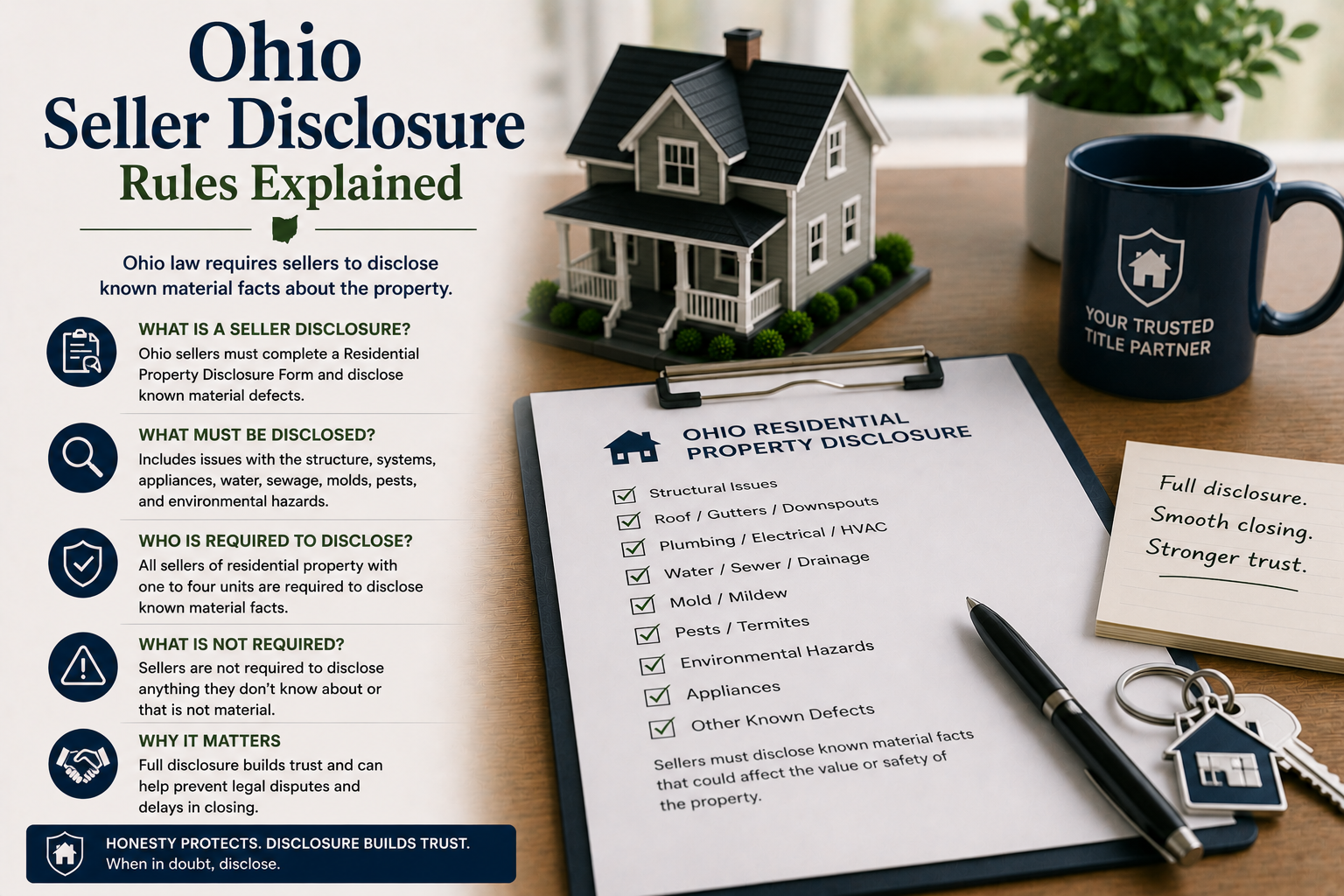
When you buy a home in Ohio, you deserve to know what you're walking into — literally. Ohio law requires sellers to share known information about a property's condition before the deal closes. This is the foundation of Ohio's seller disclosure rules, and understanding them can protect buyers, guide agents, and keep transactions on track.
Here's what you need to know: disclosures are mandatory in most Ohio residential sales, they cover a wide range of property conditions, and they are not a guarantee of perfection. Whether you're buying, selling, representing a client, or working at the closing table, this article breaks it all down.
What Are Ohio Seller Disclosure Rules?
Ohio Revised Code Section 5302.30 requires sellers of residential property to complete a standardized disclosure form before transferring ownership. This form asks sellers to report what they know about the condition of the home — not what an inspector might later discover.
The disclosure is a legal document. Sellers who knowingly misrepresent or conceal material defects can face legal liability after the sale closes. That's a powerful incentive for honesty.
Who Must Complete a Disclosure Form?
Most sellers of residential real property in Ohio are required to provide disclosure. There are limited exceptions, including transfers between co-owners, certain estate sales, and sales ordered by a court — but for the typical homeowner selling on the market, disclosure is mandatory.
What Ohio Sellers Must Disclose
The state-approved disclosure form covers a broad range of property conditions. Sellers must respond to questions about:
- Water and drainage issues — basement leaks, flooding history, sewer or septic system problems
- Structural components — roof condition, foundation issues, walls, and ceilings
- Mechanical systems — heating, cooling, plumbing, and electrical systems
- Environmental hazards — presence of lead paint, radon, asbestos, or underground storage tanks
- Boundary and title matters — encroachments, easements, or zoning violations the seller is aware of
- Pest or wood-destroying insect damage — known infestations or prior treatments
- Neighborhood and external conditions — nuisances, landfill proximity, or flood plain location
Sellers answer based on their actual knowledge. If they don't know, they can say so. But if they know and fail to disclose, they assume serious legal risk.
What a Disclosure Form Does NOT Guarantee
This is where many buyers — and even some professionals — get tripped up. A seller disclosure form is not a home inspection. It reflects the seller's subjective knowledge, not a comprehensive assessment of the property.
A seller might genuinely not know about a hidden plumbing issue or a slow roof leak that only appears under specific conditions. The disclosure form won't catch what the seller hasn't personally observed or been told about.
What this means in practice:
- Buyers should always order an independent home inspection regardless of what the disclosure says.
- A clean disclosure form does not mean a defect-free home.
- Agents should set clear expectations with clients from the start.
Disclosures reduce uncertainty — they don't eliminate it.
Why Real Estate Professionals Should Read Every Disclosure Carefully
For Ohio real estate agents and loan officers, the disclosure form is more than paperwork — it's a risk management tool.
Red flags in a disclosure can affect financing. A lender won't approve a conventional loan on a home with an active roof leak or failing septic system without repairs. If a disclosure mentions structural issues, an appraiser may flag the property. Understanding what's in the disclosure early helps everyone on the transaction team plan accordingly.
Agents who review disclosures with their clients, ask follow-up questions, and document conversations are far better positioned if a dispute arises after closing.
Why Title and Closing Professionals Matter Here
A seller disclosure form covers what the seller knows. A title search covers what the public record shows. These two things are not the same.
A disclosure form won't reveal an old lien, an undisclosed easement buried in county records, or a boundary dispute that never reached the current owner's attention. That's exactly what a title examination uncovers.
At American Homeland Title Agency, our role is to close the gap between what sellers disclose and what the public record reveals. A clear title commitment combined with an honest disclosure form gives buyers and lenders the most complete picture possible going into closing.
Working with an experienced title agency means the paperwork is accurate, the timeline stays on track, and unexpected title issues get resolved before they become closing-day problems.
The Bottom Line
Ohio's seller disclosure rules exist to create transparency and reduce surprises in real estate transactions. Sellers must share what they know. Buyers must still do their due diligence. And professionals — agents, loan officers, and title companies — each play a distinct role in making sure the full picture comes together before the keys change hands.
If you're preparing for a closing in Ohio, connect with the team at American Homeland Title Agency. We're here to make sure your transaction is protected from contract to close.