
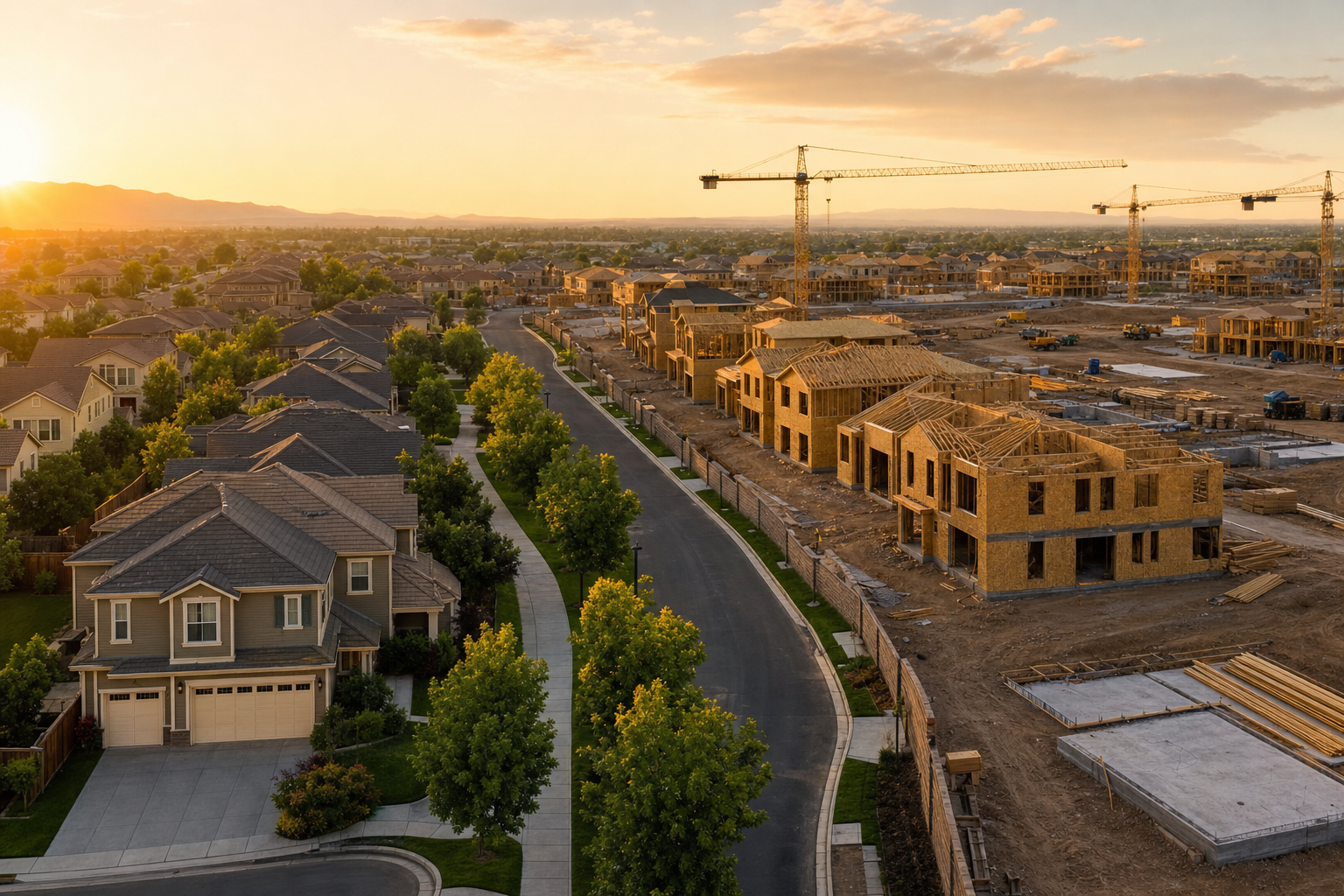
How New Development Projects Can Affect Your Home’s Value
How New Development Projects Can Affect Your Home's Value
Development Can Cut Both Ways
New construction nearby — a shopping center, a subdivision, a road widening, a new school, or a mixed-use project — can raise or lower a home's value depending on what's built, how it's built, and how close it sits to the property in question. A new grocery store, a highway interchange, or an employment center within a reasonable distance often boosts convenience and long-term demand for homes nearby, since buyers place real value on proximity to amenities and jobs. A large commercial development, a new road bringing significant traffic through a formerly quiet area, or a project that changes the overall character of a residential street can have the opposite effect, at least for the homes situated closest to it. There's no universal rule for how a given project will affect value — it depends heavily on the specifics, which is exactly why it's worth researching rather than guessing. The same shopping center that boosts value for homes a mile away can create parking, noise, or lighting concerns for the handful of homes directly adjacent to it, so distance and orientation matter as much as the type of project itself.
Why Timing Matters More Than People Expect
The value impact of a nearby project often changes considerably over the life of that project, and buyers who only look at the current snapshot can miss the bigger picture. Values can dip slightly during active construction due to noise, dust, road closures, and general disruption, then recover or even exceed the pre-construction baseline once the project is finished and its benefits — new retail, improved roads, added recreational amenities — are fully realized by the surrounding area. If you're buying near an announced project, ask specifically whether it's fully approved, actively under construction, or still sitting in the planning and zoning review stage, since plans at that early stage can change substantially, get scaled back, or fall through entirely between the initial announcement and any groundbreaking. Timing your own expectations to the project's actual stage, rather than to early renderings or press coverage, keeps you from over- or under-weighting its effect on the price you're willing to pay.
How to Track What's Being Planned Near a Property
Local township and city planning and zoning departments maintain public records of proposed developments, rezoning applications, and variance requests, and most hold public meetings before approving any new project of significance. Check directly with the relevant township trustees or city planning commission covering the property you're considering, and ask specifically about anything currently in the pipeline within a mile or two of the address. County and regional planning commission websites often post meeting agendas and minutes online well in advance, which can flag a proposed project long before it becomes visible on the ground or shows up in local news coverage. Doing this legwork before you write an offer — not after you've already closed — gives you a realistic picture of what the surrounding area may look like in five or ten years, not just how it looks today. Many townships and cities also maintain an online GIS mapping tool where zoning designations and pending applications are layered directly over parcel maps, which can save you a trip to a public counter for a first pass.
Infrastructure Projects Deserve Their Own Look
Road widenings, new interchanges, utility easements, and other public infrastructure projects can affect a specific property directly, sometimes through eminent domain proceedings or right-of-way acquisition that changes lot lines, setbacks, or usable yard space. The Ohio Department of Transportation and individual county engineer's offices publish planned project information covering upcoming road and infrastructure work, and a professional title search will surface any existing easements or recorded right-of-way documents already affecting a specific parcel today. If a major infrastructure project is planned near a home you're considering, ask your title company or real estate attorney whether anything related has already been recorded against the property, and ask the relevant public agency about the project's realistic timeline and scope before you assume it will or won't affect your daily life. Even projects that ultimately improve an area, like a widened road or a new interchange, can mean months of construction noise, detours, and altered commute patterns in the meantime, so factor the disruption period into your decision, not just the eventual finished result.
Weighing Development Risk as Part of Your Purchase Decision
Before you buy near a planned development of any kind, gather the facts directly from the township, city, or county planning office rather than relying on rumor, informal neighborhood chatter, or outdated online discussion threads, and factor the realistic timeline and likelihood of approval into your overall decision. A well-planned development near a home you're buying isn't inherently good or bad for your future value — it's simply a factor to research and weigh alongside price, condition, commute, and everything else that goes into a purchase decision. Treating it as one more piece of verifiable information, rather than as an emotional wildcard, will serve you better than either ignoring it entirely or assuming the worst without checking the actual facts on file with your local government. If a project's outcome is genuinely uncertain, discuss with your agent and, if needed, a local land-use attorney how it might reasonably factor into your offer price or your negotiating position, rather than making a purely emotional decision either way.
Provided by American Homeland Title Agency
For advertising purposes only.
Equal Housing Opportunity — we support fair and equal access to housing for all, regardless of race, color, religion, sex, handicap, familial status, or national origin.