
What Is a Title Search?
What Is a Title Search?
When you're buying a home, refinancing a property, or closing a business deal in Ohio, one of the most important steps happens quietly behind the scenes: the title search. Most people don't think much about it—until something goes wrong. Understanding what a title search is and why it matters can save you from serious financial and legal headaches down the road.
Here's what this article covers:
- What a title search actually is
- What problems it can uncover
- How the process works
- Why it matters for buyers, lenders, agents, and business owners
What Is a Title Search?
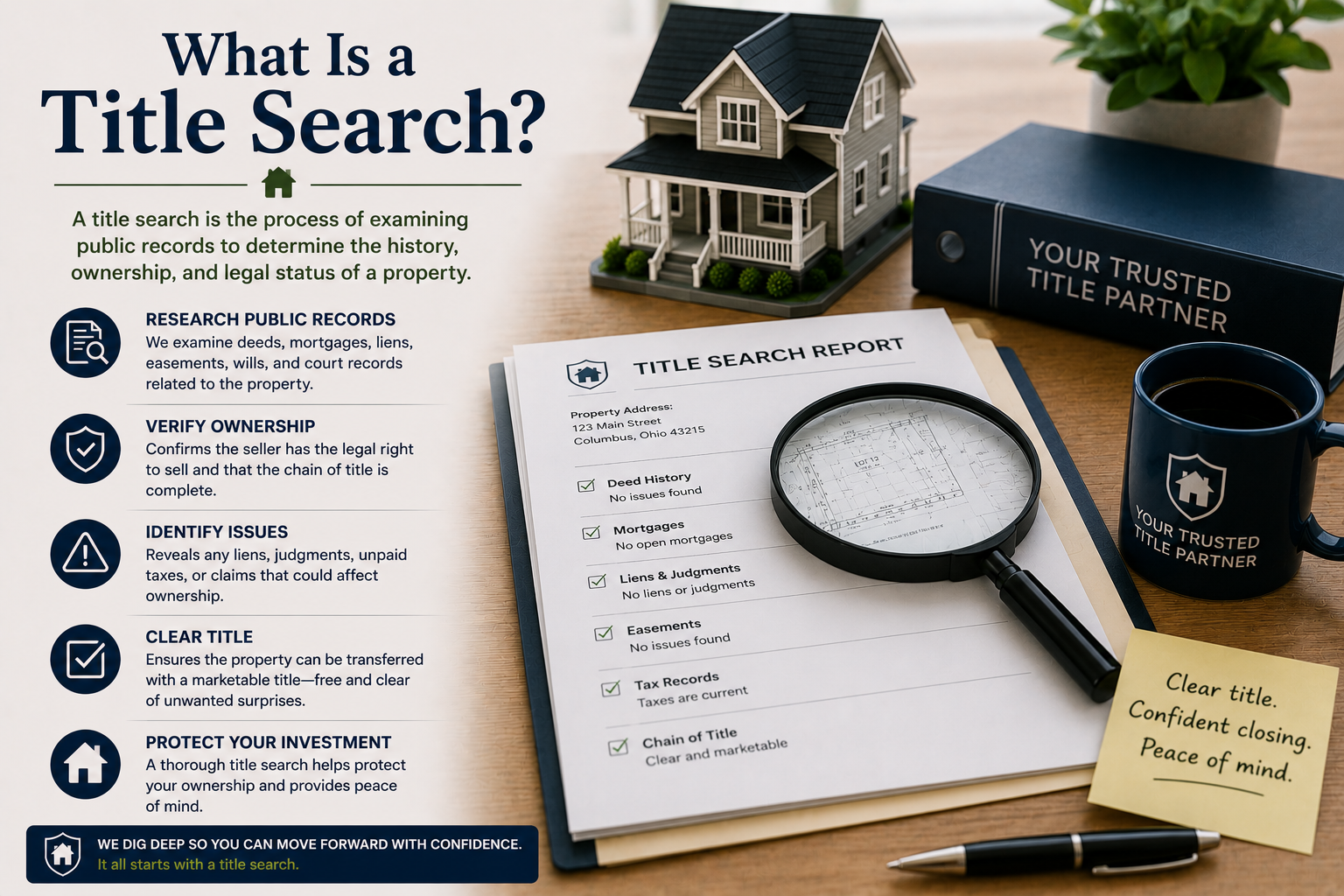
A title search is a thorough review of public records related to a property. Its goal is to confirm that the seller has a legal right to transfer ownership—and that no hidden claims, liens, or disputes are attached to the property.
Think of it as a background check for real estate. Just as you'd want to know if a used car had been in a serious accident, you want to know if a property has unresolved financial or legal issues before you sign on the dotted line.
In Ohio, title searches typically examine county recorder records, court filings, tax records, and other public documents. The depth of that search matters—and so does the expertise of the people doing it.
What Can a Title Search Uncover?
This is where title searches earn their value. A thorough search can reveal issues that would otherwise blindside a buyer or lender. Common problems include:
- Unpaid liens – A previous owner may have left behind unpaid contractor bills, HOA fees, or judgments that attach to the property.
- Mortgage issues – Old mortgages that were never properly released can cloud a title for years.
- Tax delinquencies – Back property taxes in Ohio can become a lien against the property, transferring that obligation to the new owner if unresolved.
- Boundary and survey disputes – Overlapping or unclear property boundaries can affect what you actually own.
- Errors in public records – Clerical mistakes in deeds, misspelled names, and incorrect legal descriptions are more common than most people expect.
- Fraudulent transfers – In rare but serious cases, forged signatures or fraudulent conveyances can put ownership in question.
- Easements and restrictions – Prior agreements that limit how a property can be used may not be obvious from a casual inspection.
Each of these issues has the potential to delay a closing, reduce a property's value, or trigger costly legal disputes. Catching them early is far better than discovering them after you've taken ownership.
How Does the Title Search Process Work?
A title search typically follows a structured process:
- Order placement – Once a purchase agreement is signed or a loan is initiated, the title search is ordered, usually through a title agency like American Homeland Title Agency.
- Public records examination – A trained title examiner searches county recorder offices, courts, and tax records—often going back 40 to 60 years or more in Ohio, depending on the property history.
- Abstract or title report – The examiner compiles findings into a summary that identifies any issues, or "clouds," on the title.
- Clearing exceptions – If problems are found, they must be resolved before closing. This may involve paying off liens, obtaining corrective deeds, or working with attorneys.
- Title commitment – Once the search is clear, a title commitment is issued, laying the groundwork for title insurance.
The timeline varies, but most searches are completed within a few days to a couple of weeks, depending on the complexity of the property's history.
Why It Matters for Everyone at the Table
Buyers have the most at stake. Without a clean title, you could purchase a property and still face claims from creditors, heirs, or other parties. Title insurance—issued after a clean title search—protects your investment against defects that weren't discovered before closing.
Lenders and loan officers require title searches before funding a mortgage. A clear title protects the lender's security interest in the property. No lender will issue a mortgage on a property with unresolved title issues.
Real estate agents depend on smooth closings to serve their clients well. Title problems are one of the most common reasons transactions fall apart or get delayed. Working with a reliable title agency helps keep deals on track.
Business owners purchasing commercial property in Ohio face the same risks—sometimes amplified. Commercial transactions often involve more complex ownership histories, easements, and zoning considerations that make a thorough title search even more critical.
Work With a Title Agency You Can Trust
A title search is only as good as the team performing it. Experience, attention to detail, and local knowledge matter—especially in Ohio, where property records and county processes can vary significantly from one jurisdiction to another.
At American Homeland Title Agency, we bring deep expertise in Ohio title searches to every transaction. Whether you're a first-time homebuyer, a seasoned real estate agent, a loan officer managing a pipeline, or a business owner closing on commercial property, we're here to make sure the title is clean, the closing is smooth, and your investment is protected.
Ready to get started? Contact American Homeland Title Agency today to learn how we can support your next Ohio real estate transaction.